


Oxford Begins World’s First Human Trial
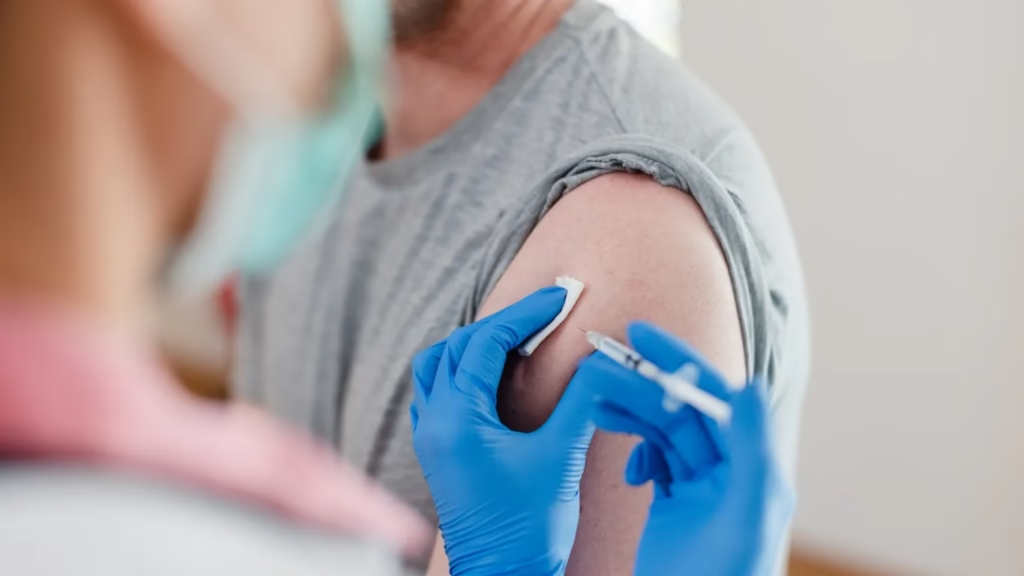
Scientists at the University of Oxford have administered the first dose of an experimental vaccine developed to protect against the Bundibugyo strain of Ebola, marking the first-ever human trial for a vaccine targeting this rare but dangerous virus. The Phase I study, known as BD-Ebov, will involve 50 healthy volunteers between 18 and 55 years of age to assess the vaccine’s safety and its ability to generate an immune response.
Addressing an Unmet Medical Need
The Bundibugyo strain has been responsible for several Ebola outbreaks in Africa, including recent cases reported in the Democratic Republic of Congo and Uganda. Unlike the Zaire strain, for which approved vaccines are already available, there is currently no licensed vaccine or specific treatment for Bundibugyo Ebola. According to BBC News, researchers fast-tracked the vaccine’s development to help close this critical gap in outbreak preparedness.
Significance of the Clinical Trial
The experimental vaccine is based on Oxford’s ChAdOx1 viral vector platform, a technology previously used in vaccines against other infectious diseases. If the trial confirms the vaccine is safe and capable of producing a strong immune response, it will progress to larger clinical studies to evaluate its effectiveness in preventing infection.
Strengthening Future Outbreak Preparedness
Health authorities are continuing efforts to control one of the largest recorded Bundibugyo Ebola outbreaks, which has resulted in over 1,000 deaths and thousands of infections. Ongoing conflict, misinformation, and limited healthcare infrastructure have made containment efforts more challenging. Researchers believe that a successful vaccine could become an important tool for preventing future outbreaks and improving protection for at-risk populations.