Global health authorities moved swiftly on Tuesday (September 23) to counter U.S. President Donald Trump’s remarks linking common medicines and vaccines to autism, stressing that scientific evidence does not support such claims.
In a White House briefing a day earlier, Trump had advised pregnant women to avoid taking Tylenol known internationally as paracetamol and suggested that routine childhood vaccines might contribute to autism. The comments, delivered in unusually direct medical terms, placed unverified health claims at the center of U.S. policy debate.
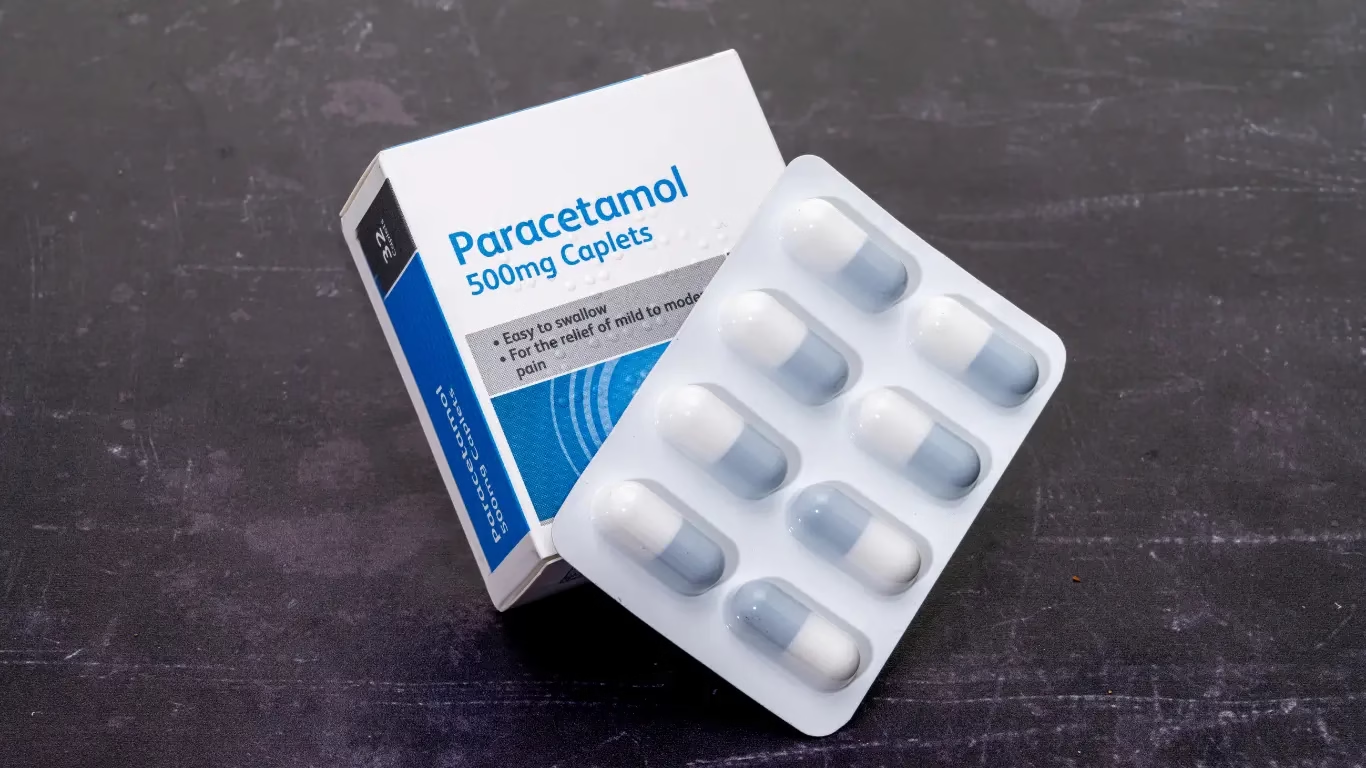
European and British health regulators immediately rejected the assertions. The European Medicines Agency (EMA) confirmed there was “no new evidence” that would justify altering its recommendations on paracetamol use during pregnancy. “Available evidence has found no link between the use of paracetamol during pregnancy and autism,” the EMA said, adding that the medicine remains safe when taken as needed, at the lowest effective dose. Britain’s health regulator echoed the same position.
The World Health Organization (WHO) also weighed in, urging caution against drawing unfounded conclusions. WHO spokesperson Tarik Jašarević acknowledged that while some studies have hinted at a potential connection, follow-up research has not confirmed those findings. “The evidence remains inconsistent… this lack of replicability really calls for caution in drawing causal conclusions,” he told reporters in Geneva.
Jašarević also reaffirmed the safety of vaccines, saying there is no evidence they cause autism. “Vaccines save lives. This is something that science has proven, and these things should not be questioned,” he said.
Medical societies globally continue to emphasize that acetaminophen, the active ingredient in Tylenol, is a widely used and safe treatment for pain and fever in pregnancy, and that vaccines remain one of the most effective tools in protecting children’s health.