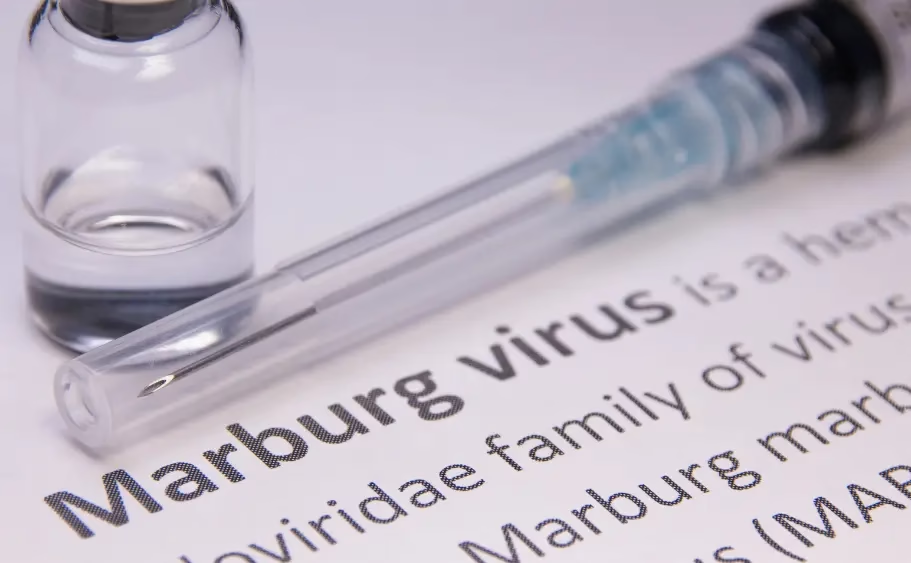
The death toll from Ethiopia’s Marburg virus outbreak has increased to six, state media reported on Wednesday. The outbreak was first confirmed on 14 November, with three deaths recorded within days. According to the Ethiopian Press Agency, 11 people have tested positive so far six have died and five remain under medical care.
Health authorities have isolated 349 people who may have come into contact with patients; 119 have completed monitoring and been released.
About Marburg Virus Disease (MVD)
Marburg virus disease is a severe and often fatal illness caused by Marburg and Ravn viruses, both belonging to the Filoviridae family the same as Ebola. Average fatality is around 50%, though past outbreaks have ranged from 24% to 88%. The virus’s natural host is the Rousettus aegyptiacus fruit bat.
Transmission
- Initial infections often occur through exposure in bat-inhabited caves or mines.
- The virus spreads between humans through direct contact with blood or bodily fluids, or contaminated surfaces.
- Healthcare workers and people involved in unsafe burial practices are at higher risk.
- Patients become infectious only after symptoms appear.
Symptoms
Incubation: 2–21 days.
Sudden onset of high fever, severe headache, and malaise, followed by diarrhoea, abdominal pain, nausea, and vomiting.
By days 5–7, patients may develop serious haemorrhaging, including bleeding from multiple sites. Confusion and nervous system involvement may occur.
Fatal cases typically lead to death from severe blood loss and shock within 8–9 days of symptom onset.
Diagnosis
MVD can resemble malaria, typhoid, or other haemorrhagic fevers. Confirmation requires:
- ELISA (antibody or antigen detection)
- RT-PCR
- Virus isolation in high-containment labs
All samples pose extreme biohazard risks and must follow strict containment and transport protocols.
Treatment
There are no approved vaccines or antiviral treatments yet. Early supportive care especially rehydration and management of symptoms significantly improves survival. Several vaccine and drug candidates are currently under development.