


On the occasion of World Brain Day, we align with the World Federation of Neurology’s theme: “Brain Health for All Ages.” The human brain evolves across the lifespan—from early childhood to advanced age—and maintaining its health requires attention at every stage. This year, we spotlight scientific insights, nutrition, sleep, lifestyle habits, and urgent public health initiatives that support cognitive well-being.
AI vs. the Human Brain: The Emotional & Creative Edge

Artificial Intelligence may be advancing rapidly, but neurologists emphasize it still falls short in replicating the brain’s emotional depth, creativity, and empathy. Dr. Chandrashekhar Meshram highlights that while machines process data, the human brain imagines, feels, and remembers—making it irreplaceable.
Fact: India sees rising neurological burden, with 1 in 5 Indians aged 45+ reporting early signs of cognitive decline, according to ICMR data.
Childhood Nutrition: Laying the Foundation Early
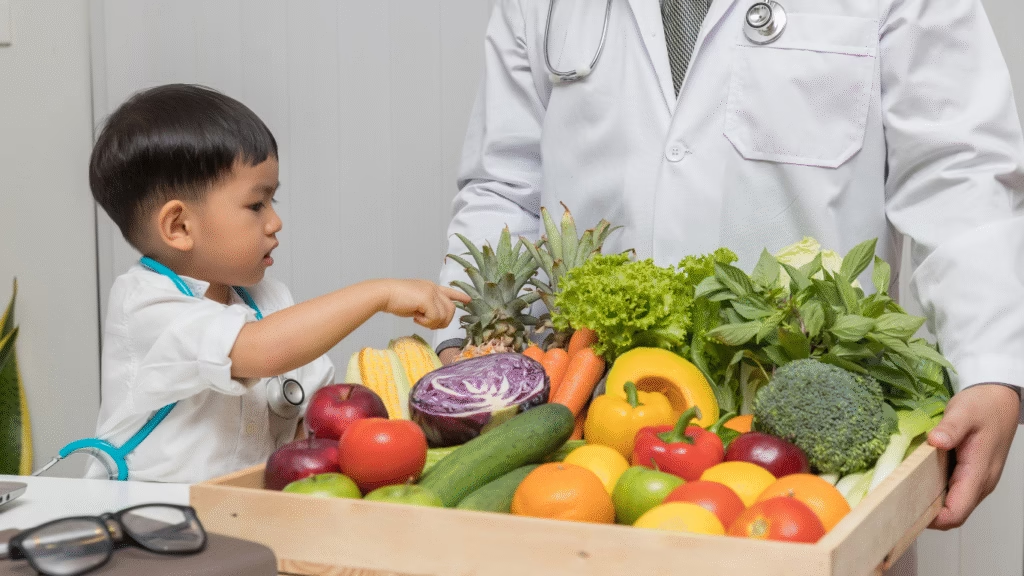
Experts recommend brain-supportive superfoods—walnuts, berries, eggs, dairy and leafy greens—to boost early development. Micronutrient deficiencies remain widespread:
- Nearly 60% of Indian children under 12 are deficient in micronutrients like Omega‑3s and B‑vitamins.
- A study reported 22% of infants were Vitamin B₁₂ deficient, and 54% of those showed early neurodevelopmental delays.
Sleep and Alzheimer’s: Monitoring for Early Detection

Sleep is a powerful window into brain health. Recent research published in Alzheimer’s & Dementia reveals that REM sleep delay could be an early sign of Alzheimer’s disease—even decades before diagnosis. In India:
- An estimated 8.8 million people aged 60+ are living with dementia, with 60% of those cases being Alzheimer’s.
- Globally, 5% of those aged 65–74, 19% of 75–84, and ~50% of over‑85s are affected.
Stronger sleep hygiene—like consistent bedtimes and reducing screen usage—is increasingly critical for midlife prevention.
Stroke Awareness in India: Young Brains at Risk
Stroke affects individuals across all ages—India sees a new stroke every 6 seconds.
- Across India, 20–30% of stroke cases are now reported in younger adults aged 18–45, reflecting a nationwide rise in early-age stroke incidence.
- Meta-analyses confirm ~24% of strokes occur under age 50, with 10–15% happening under 40.
- Meanwhile, 75% occur in those aged 50+, and ~64.5% of cases are men.
Apollo Hospital’s PRAYAAS campaign raises awareness using the FAST acronym (Face droop, Arm weakness, Speech difficulty, Time to call) and supports rapid response through stroke-ready ambulances and a 24/7 helpline (Dial 1066).
Harvard’s 12 Habits: Proven Ways to Reduce Risk

Harvard neuroscientists outline 12 lifestyle habits that support brain longevity, including:
- Regular exercise
- Mediterranean-style diet
- Mental stimulation
- Social engagement
- Stress reduction
- Good sleep
Evidence suggests practicing even 5 of these habits regularly can reduce dementia risk by up to 60%.
A Lifespan Approach to Brain Health
From childhood superfoods to cutting-edge sleep research and vital emergency stroke response, World Brain Day 2025 powerfully underscores that brain health is a shared, lifelong commitment. As cognitive disorders surge among both young and older populations, prevention through education, healthy lifestyle choices, and accessible healthcare has become not just important—but absolutely urgent. The data reveals a compelling narrative:
- Infants and children are grappling with micronutrient deficiencies that hinder proper brain development.
- Young and middle-aged adults (30s to 50s) face a rising risk of stroke and its long-term consequences.
- Older adults are increasingly affected by dementia, with Alzheimer’s disease becoming a significant challenge.
Together, these insights demand a unified, across-the-ages approach to safeguard brain health for generations to come.
Let’s protect brain brilliance at every age.
Source: World Federation of Neurology, Alzheimer’s & Dementia Journal, Harvard Medical School Publications, Apollo Hospitals Official Website, Times of India, Pace Hospitals Blog