


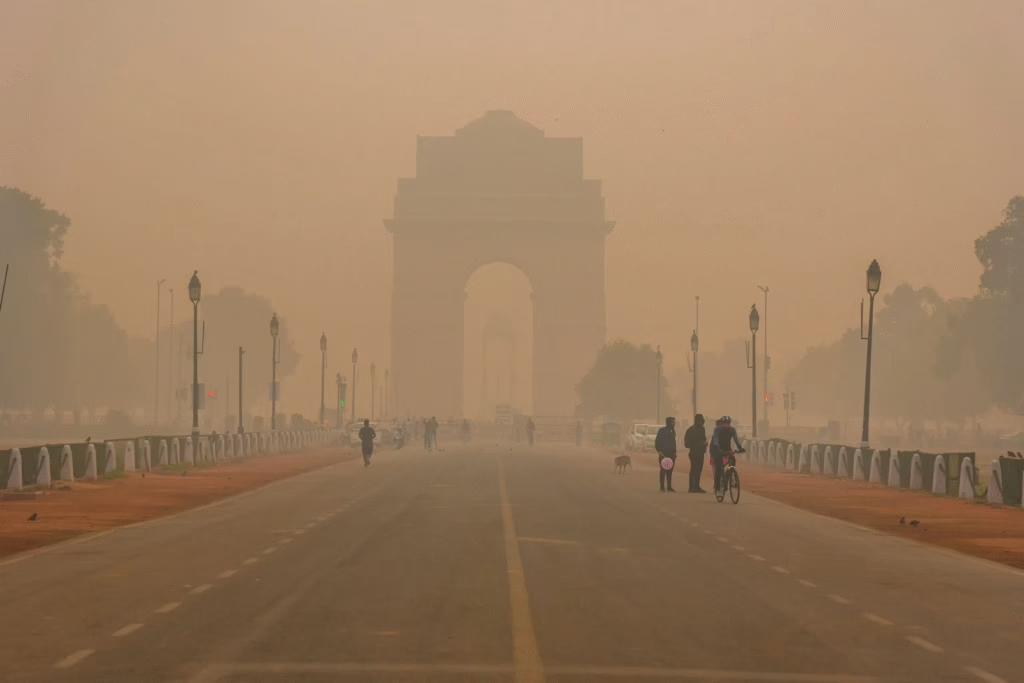
New Delhi continues to grapple with hazardous air quality, with PM2.5 levels remaining far above safe limits and posing a serious public health risk to residents across the National Capital Region (NCR). Experts attribute the recurring winter pollution crisis largely to sustained local emissions combined with unfavourable meteorological conditions such as low wind speed and temperature inversion, which trap pollutants close to the ground.
Contrary to earlier assumptions, recent data from the Central Pollution Control Board (CPCB) shows that stubble burning now contributes negligibly to Delhi’s PM2.5 levels, despite a 77.5 percent reduction in such incidents since 2021. Instead, vehicular emissions, waste burning, construction dust and industrial combustion have emerged as the dominant pollution sources, a finding supported by the Centre for Science and Environment (CSE).
The health impact has been severe. Global Burden of Disease data indicates that air pollution accounted for 15 percent of all deaths in Delhi in 2023, amounting to over 17,000 fatalities. Hospital data also shows a sharp rise in acute respiratory infections, with more than 30,000 patients requiring hospitalisation between 2022 and 2024.
In response to worsening conditions, the Commission for Air Quality Management (CAQM) has enforced Stage IV of the Graded Response Action Plan (GRAP). Measures include suspension of physical classes for younger students, work-from-home mandates for offices, a ban on non-BS-VI vehicles, restrictions on construction activities and prohibition of coal- and wood-fired tandoors.
While authorities say these steps offer temporary relief, experts stress that long-term improvements will require stricter control of local emissions, better air quality monitoring and stronger health-focused policy interventions.