


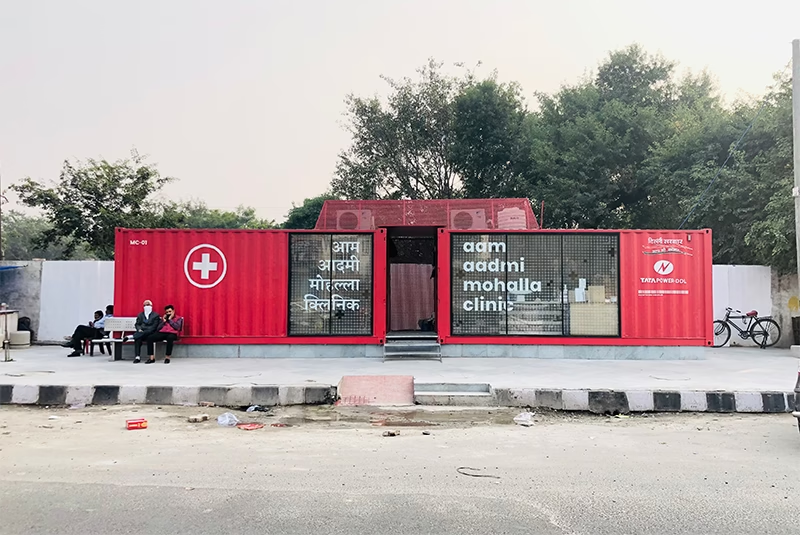
The Delhi government has decided to phase out existing Mohalla Clinics in areas where Ayushman Arogya Mandirs (AAMs) are being established, as both aim to deliver primary healthcare services. This decision emerged from a meeting held to plan the implementation of Urban Ayushman Arogya Mandirs.
According to the meeting, chaired by Delhi Health Minister Pankaj Singh on April 17, the withdrawal of Mohalla Clinics will be considered in areas where AAMs can adequately serve the local population. The meeting minutes, finalized on May 7, state: “Mohalla Clinics in the vicinity should be withdrawn if the Ayushman Arogya Mandirs can cater to the same population.”
AAMs are part of the Centre’s Ayushman Bharat Health Infrastructure Mission (PM-ABHIM), which gained momentum following the BJP’s win in the February 2025 Delhi elections. Under this initiative, 1,139 sub-centres and 123 new Primary Health Centres (PHCs) have been approved for the 2025-26 fiscal year across Delhi.
Currently, there are 553 Mohalla Clinics in the capital, but only 11 operate from government-owned buildings. In March, Minister Singh had already announced that around 250 Mohalla Clinics running from rented spaces would be shut down. So far, 70 sites have been marked for conversion into AAMs, with the Public Works Department (PWD) instructed to finish this transformation by the third week of May. As previously reported, the deadline for completing the first 70 AAMs is May 31.
To ensure continuity of care, medical and paramedical staff at existing Mohalla Clinics will be retained for up to a year or until new AAM personnel are appointed. Staff will be given advance notice in accordance with their contracts before being de-empanelled.
It was also recommended that recruitment for new AAMs follow the guidelines of the Delhi State Health Mission. Hiring responsibilities will lie with district-level authorities under the supervision of District Magistrates, with a detailed recruitment plan to be submitted soon.
The meeting also reviewed progress on establishing 11 Integrated Public Health Laboratories (IPHLs) under PM-ABHIM. The Rajiv Gandhi Super Specialty Hospital in Shahdara has been selected as the model IPHL site, with evaluations already completed. Nine other district hospitals have also been earmarked for IPHLs. As New Delhi district lacks a suitable hospital, the Chief District Medical Officer (CDMO) has been tasked with identifying possible facilities for an IPHL there.
This transition signals a significant overhaul of Delhi’s primary healthcare system, moving away from the Aam Aadmi Party’s (AAP) signature Mohalla Clinics toward the Centre-backed AAM model. However, the complete shift will depend on whether AAMs can match or exceed the service levels and patient load management of the outgoing clinics.