


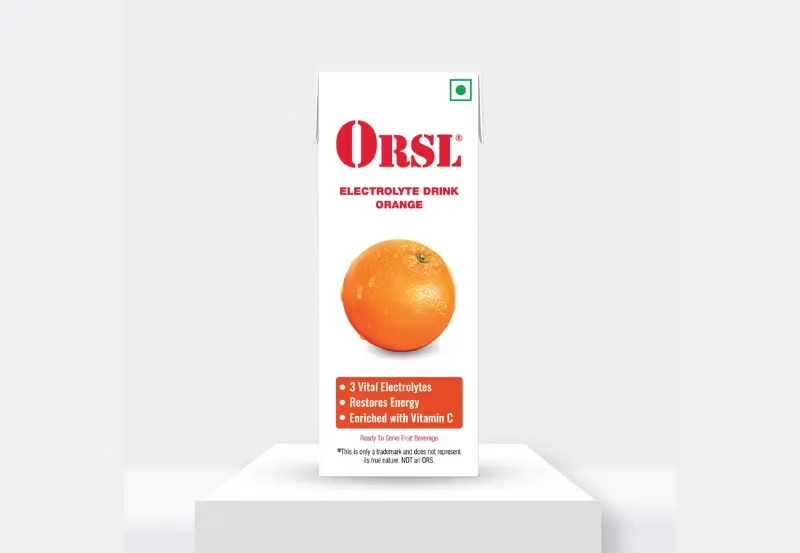
In the fight against misleading “ORS” beverages, the Delhi High Court has temporarily stayed the Food Safety and Standards Authority of India’s (FSSAI) recent orders restricting the use of “ORS” branding. The stay, granted after a petition by JNTL Consumer Health, a Johnson & Johnson subsidiary allows the company to continue selling its ORS-labelled drink and manage its existing stock.
FSSAI had, on October 14, prohibited the use of “ORS” in the names or labels of any product that does not match the World Health Organization’s (WHO) recommended oral rehydration solution formulation. The regulator said that such branding misleads consumers and poses health risks, especially to children, since many of these so-called ORS drinks contain excessive sugar and insufficient electrolytes.
However, JNTL’s petition argued that the decision was “arbitrary” as the company had previously received permission to use the term “ORS” under earlier advisories and had manufactured stock worth around ₹155–180 crore based on those approvals. Justice Sachin Datta, hearing the case, directed that FSSAI’s orders not be enforced until JNTL is given a fair hearing and time to respond.
Concerns from the Medical Community
The stay has alarmed public health advocates and paediatricians who had hailed FSSAI’s ban as a long-awaited reform. Dr. Sivaranjani Santosh, a Hyderabad-based paediatrician who has campaigned for years against misleading ORS drinks, condemned the interim relief, calling it a “national shame.”
In a video posted on social media, she criticised what she described as consent to dispose of existing ORSL stock a claim FSSAI has firmly denied. “If this had happened in the US, the company would have faced lawsuits worth millions,” she said. “Why are we allowing high-sugar drinks to be passed off as ORS?”
FSSAI responded publicly, clarifying that it has not permitted or agreed to the sale or disposal of any ORSL stock. It termed the online claims as “misrepresentation of facts,” urging people to refer to the official court order for details.
The Bigger Picture
India continues to grapple with diarrhoeal diseases, which account for about 13% of deaths among children under five. True ORS with a specific WHO-approved mix of salts and glucose is a lifesaving therapy capable of reducing mortality by over 90%. Many commercially sold “ORS” drinks, however, contain up to ten times more sugar than the medical standard, making them more akin to soft drinks and potentially harmful for dehydrated children.
The October 14 advisory was hailed as a landmark move by FSSAI, clearly stating that no food or beverage could use “ORS” even as part of a brand name like “Hydra ORS” or “Smart ORS” unless it met medical formulation standards.
What Happens Next
While the High Court’s stay is temporary, it has created uncertainty for consumers and retailers alike. Parents now face confusion in distinguishing between genuine medical ORS and sugar-laden “hydration” drinks, while retailers are divided over whether to keep selling such products.
Health experts stress the need for clearer labelling and stricter enforcement to ensure that only WHO-approved ORS products are sold in pharmacies, hospitals, and schools. As Dr. Sivaranjani urged, “No drink should carry the ORS name unless it meets the medical formula. Anything else is putting children at risk.”
The larger question remains was the relief granted to ORSL’s stock justified, given the public health implications for millions of Indian children?