


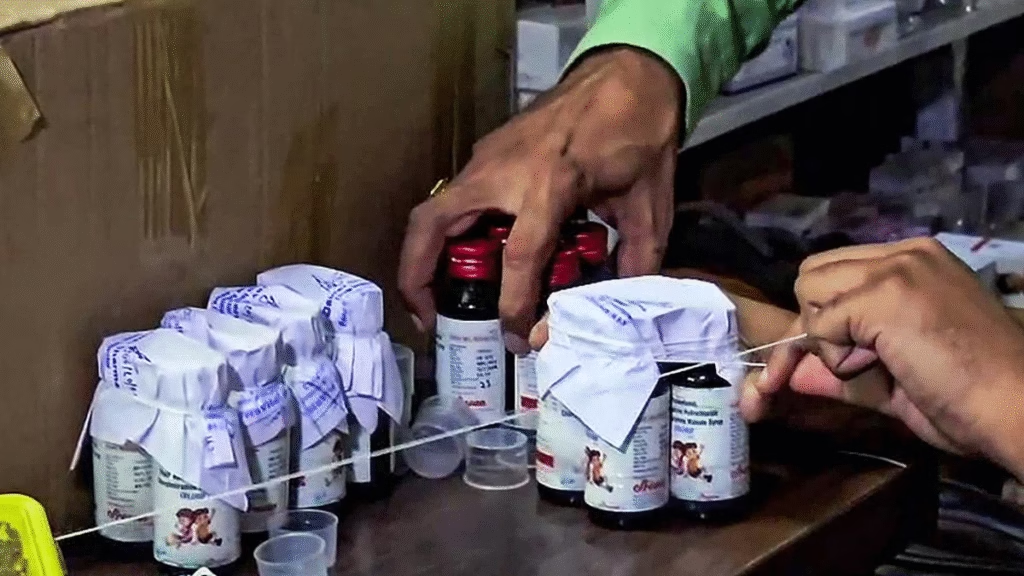
The Uttar Pradesh government on Sunday (Oct 5) banned the sale, import, and export of Coldrif cough syrup following reports that the medicine caused the deaths of at least 14 children in Madhya Pradesh’s Chhindwara district. The order comes amid a widening crackdown across several states and mounting concerns over toxic contamination in children’s medicines.
UP’s Assistant Commissioner of Drug Administration directed all drug inspectors to collect Coldrif syrup samples from government and private institutions statewide and send them to a Lucknow laboratory for urgent testing. This is a precautionary measure to prevent further harm and ensure medicine safety, the order stated.
The Central Drugs Standard Control Organisation (CDSCO) confirmed it will recommend strict action against Sresan Pharmaceuticals, the Chhindwara-based manufacturer, and has asked the Tamil Nadu Food and Drug Administration (FDA) to take the strictest measures possible.
Following the deaths of children several states, including Madhya Pradesh, Maharashtra, Rajasthan, Kerala, and Telangana, have banned its sale and distribution.
Ground Zero of the Tragedy
The alarm was first raised in Madhya Pradesh’s Chhindwara district, where 14 children all under five years died after consuming Coldrif syrup, allegedly prescribed for viral fever. Laboratory tests later revealed the syrup contained 48.6% Diethylene Glycol (DEG), a highly toxic solvent that can cause kidney failure, liver damage, and death.
Following this revelation, Madhya Pradesh CM Mohan Yadav ordered a statewide ban on the sale and distribution of Coldrif and similar syrups, including Nextro DS, pending further testing.
Police have arrested Dr. Praveen Soni, a paediatrician from Parasia, who had prescribed the syrup to several of the affected children. An FIR has been filed against him and the operators of Sresan Pharmaceuticals under the Drugs and Cosmetics Act and Bharatiya Nyaya Sanhita (BNS) for alleged negligence and culpability.

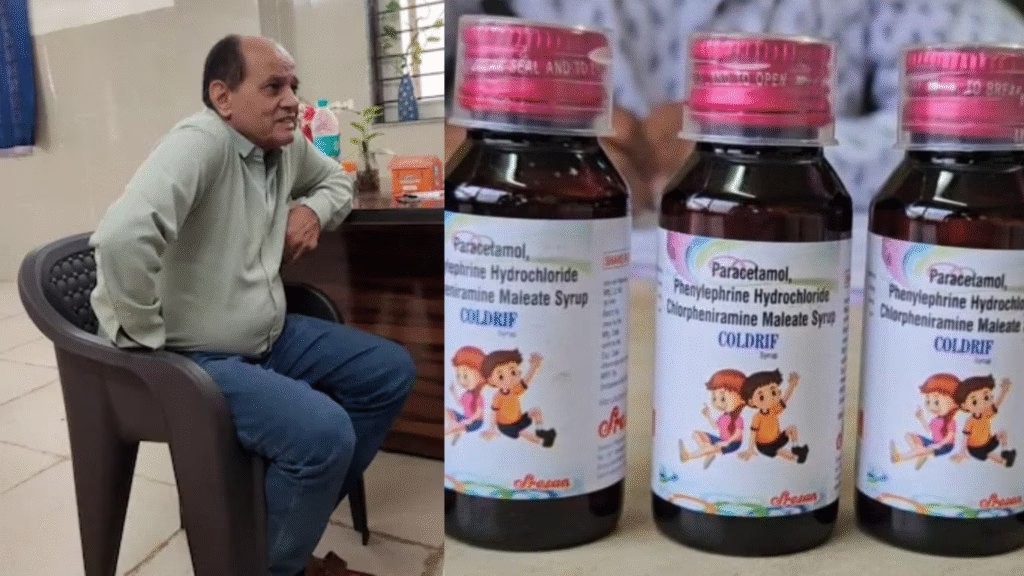
I have been prescribing medicines from this company for over ten years. These are sealed, ready-to-use syrups; we don’t control their formulation, Dr. Soni told reporters before his arrest, defending his actions.
Kerala Health Minister Veena George confirmed that while the contaminated batch wasn’t distributed in the state, the government acted out of abundant caution. Inspectors have been instructed to stop all Coldrif distribution immediately, she said. All eight distributors have been ordered to suspend operations and withdraw stocks from shelves.
Similarly, the Maharashtra FDA issued an advisory to chemists to remove Coldrif stocks from stores and stop further sales until safety confirmation arrives.
Centre Issues Nationwide Advisory
In the wake of the incident, the Union Health Ministry has issued a nationwide advisory, warning healthcare professionals not to prescribe or dispense cough and cold syrups to children below two years of age.
It also directed state health departments to ensure strict enforcement and step up post-market surveillance for cough syrups and paediatric medicines.
Investigations revealed Coldrif syrup samples contained Diethylene Glycol (DEG) and Ethylene Glycol (EG) industrial solvents used in antifreeze, brake fluids, and plastics. These chemicals are not meant for pharmaceutical use and are lethal even in small doses.
Exposure can lead to acute kidney injury, liver failure, neurological damage, and death, particularly in young children.
A similar DEG poisoning in The Gambia (2022) killed more than 70 children, triggering six global alerts by the World Health Organisation (WHO).
The WHO recommends a two-tier testing process for early detection of DEG/EG contamination: thin-layer chromatography (TLC) for initial screening and gas chromatography at certified labs for confirmation.
According to sources, Madhya Pradesh’s Drug Regulatory Authority and Tamil Nadu-FDA are jointly investigating how such a high level of DEG contamination escaped quality checks.
Preliminary findings suggest possible use of substandard raw materials in the syrup’s formulation or contamination during the manufacturing process.
Meanwhile, the CDSCO has ordered a pan-India inspection of all cough syrup manufacturers to verify compliance with Good Manufacturing Practices (GMP) and raw material traceability.
Doctor Arrest Sparks Backlash
Dr. Soni’s arrest has led to protests by medical professionals in Madhya Pradesh. The Indian Medical Association (IMA) Chhindwara unit president, Dr. Kalpana Shukla, said doctors would launch an indefinite strike if he is not released soon.
Doctors cannot be held responsible for contamination they neither produce nor can test, she stated.
Expert Comment
This is a clear case of toxic contamination. Even trace amounts of Diethylene Glycol can cause irreversible renal failure in children. Quality checks in drug manufacturing must be watertight. – Dr. Rajeshwari Menon, Toxicologist, AIIMS New Delhi
These incidents have prompted global scrutiny of India’s pharmaceutical export oversight, often dubbed the pharmacy of the world.