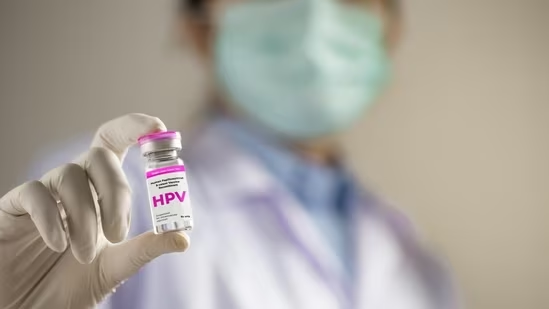
In a major boost to women’s health, the Central government is preparing to roll out a nationwide Human Papillomavirus (HPV) vaccination programme that will provide free vaccines to adolescent girls across India, official sources confirmed.
The initiative aims to protect young girls from cervical cancer one of the most common yet preventable cancers among women in India. The move aligns with the government’s vision of “Swastha Nari” and seeks to reduce the heavy disease burden, as cervical cancer accounts for nearly 80,000 new cases and over 42,000 deaths annually in the country.
Medical evidence shows that almost all cervical cancer cases are caused by persistent infection with high-risk HPV strains, particularly types 16 and 18, which are responsible for more than 80% of cases in India. The upcoming vaccination programme is designed to prevent HPV infection before it progresses into cancer.
Globally, HPV vaccines are considered highly effective and safe, with studies indicating 93–100% protection against cervical cancer caused by vaccine-covered strains. More than 500 million doses have been administered worldwide since 2006, with a strong safety record. The vaccine is non-live and cannot cause HPV infection.
Under the national programme, India will administer Gardasil, a quadrivalent HPV vaccine that protects against HPV types 16 and 18 (linked to cervical cancer) as well as types 6 and 11. Scientific evidence supports that a single dose provides strong and long-lasting protection when given in the recommended age group.
The programme follows recommendations by the World Health Organization, which identifies HPV vaccination as a key strategy to eliminate cervical cancer globally. In June 2022, the Strategic Advisory Group of Experts on Immunization concluded that a single-dose schedule offers protection comparable to two-dose regimens. The December 2022 WHO position paper also endorsed single-dose vaccination for individuals aged 9-20 years, while recommending additional doses for immunocompromised individuals.
With the rollout, India will join over 160 countries that have incorporated HPV vaccination into their national immunisation schedules. More than 90 nations have adopted single-dose schedules to improve coverage and affordability.
The programme will specifically target 14-year-old girls, as vaccination at this age ensures maximum preventive benefit before potential exposure to the virus. Vaccination will be voluntary and provided free of cost to ensure equitable access across socio-economic groups.
HPV vaccines under the national drive will be administered exclusively at designated government health facilities, including Ayushman Arogya Mandirs (Primary Health Centres), Community Health Centres, Sub-District and District Hospitals, and Government Medical Colleges. Each session will be supervised by trained medical officers and healthcare teams, with provisions for post-vaccination observation and emergency care through 24×7 linked facilities.
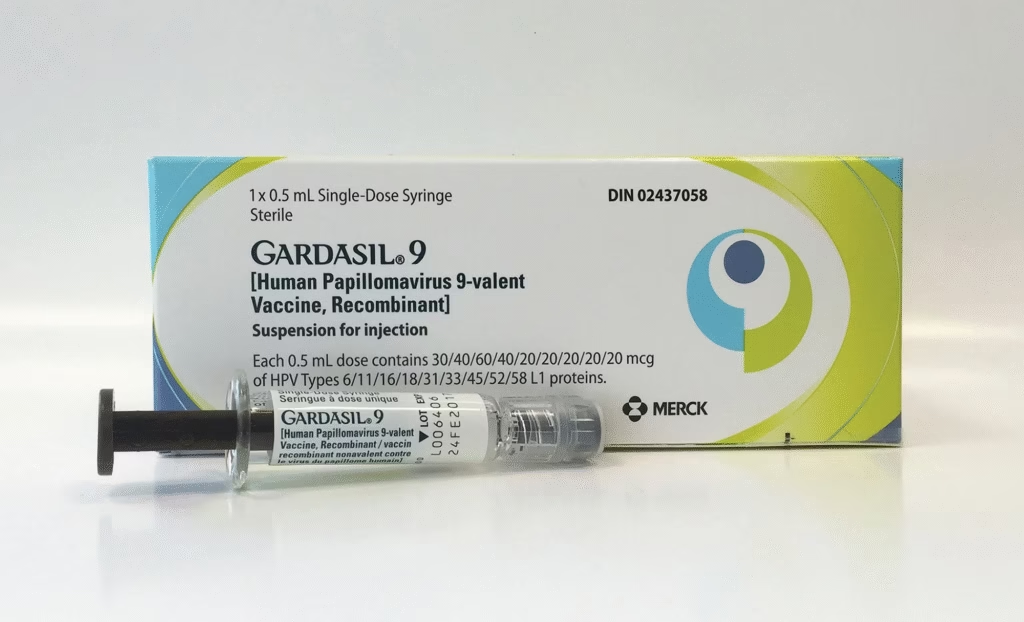
Vaccine procurement has been secured through India’s partnership with Gavi, the Vaccine Alliance, ensuring quality, transparency, and uninterrupted supply. The Gardasil vaccine has been approved by India’s drug regulator and adheres to strict quality and cold-chain standards.
Officials emphasised that the programme reflects a science-driven and delivery-focused approach, with coordination between national and state authorities to ensure smooth implementation. Parents and guardians are encouraged to vaccinate their 14-year-old daughters once the programme begins, highlighting HPV vaccination as a crucial step toward preventing cervical cancer and securing a healthier future for young girls.