


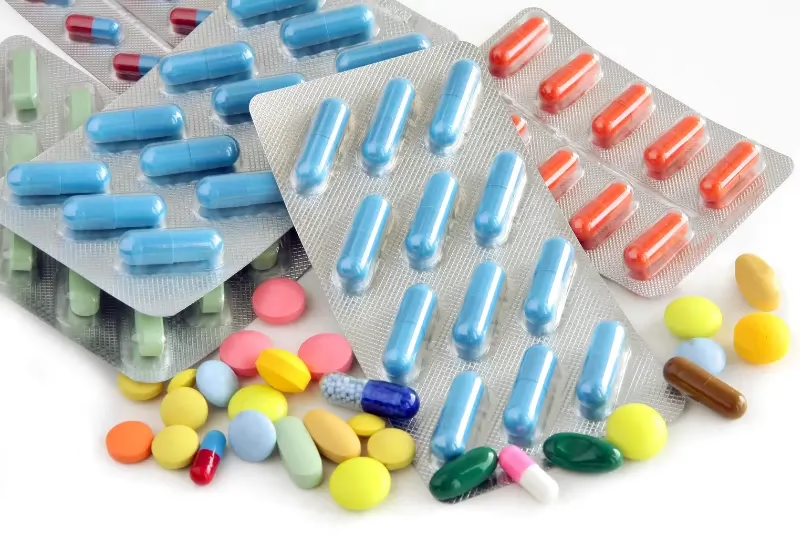
The Central Drugs Standard Control Organization (CDSCO), as part of its routine monthly drug quality surveillance, has reported 112 drug samples as Not of Standard Quality (NSQ) and flagged one cough syrup as spurious.
According to a statement issued by the Union Health Ministry, out of the total 112 substandard samples, 52 were identified by the Central Drugs Laboratories and 60 by various State Drugs Testing Laboratories. The list includes commonly used medicines such as Paracetamol, Pantoprazole, multivitamin supplements, and several other frequently prescribed drugs.
Among the flagged products, a dry cough syrup named ‘Besto-Cof’ has been marked as spurious by the State Drugs Testing Laboratory in Chhattisgarh. The syrup, reportedly containing Phenylephrine, Chlorpheniramine Maleate, and Dextromethorphan Hydrobromide, is marketed by BestoChem Formulations India Ltd. However, the company has denied manufacturing the specific batch in question, prompting CDSCO to classify it as spurious pending further investigation.
Under the Drugs and Cosmetics Act, 1940, a medicine is deemed spurious if it is falsely labeled or manufactured under the name of another product, misleading consumers.
The discovery comes amid heightened scrutiny following a tragic incident in Madhya Pradesh, where at least 24 children lost their lives after consuming a cough syrup brand Coldrif, which was later found to contain 48.6% Diethylene Glycol (DEG) a toxic chemical far exceeding the permissible limit of 0.1%.
In October, two additional cough syrup brands Respifresh TR and ReLife were also found contaminated with Diethylene Glycol beyond the acceptable threshold, though no deaths were reported in connection with these products. Following CDSCO’s communication, the World Health Organization (WHO) issued a global alert concerning all three brands: Coldrif (manufactured by Tamil Nadu-based Sresan Pharmaceuticals), Respifresh TR (by Gujarat-based Rednex Pharmaceuticals), and ReLife (by Shape Pharma).
In response to these repeated quality lapses, reports indicate that the Union Health Ministry is considering new legislation to replace the Drugs and Cosmetics Act of 1940. The proposed law aims to empower the CDSCO with greater authority to act swiftly against manufacturers producing fake or substandard medicines.
Meanwhile, the CDSCO has intensified its regulatory vigilance by mandating the testing of raw materials used in drug formulations, implementing online monitoring systems for high-risk solvents, and conducting risk-based inspections across major pharmaceutical manufacturing clusters.