


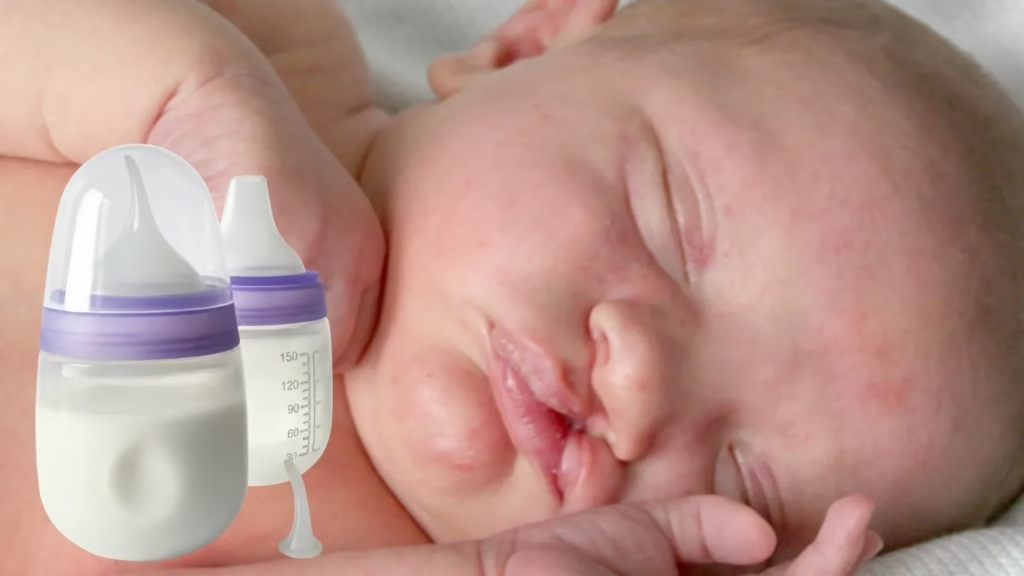
An innovative assistive feeding device, Boond, is helping address one of the most critical challenges faced by infants born with cleft lip and palate safe and effective feeding. Designed specifically for babies with incomplete oral anatomy who are often unable to generate sufficient suction to feed independently, the patented medical device provides a caregiver-friendly and anatomically sensitive feeding solution.
The name “Boond”, which means “a drop” in Hindi, reflects the principle behind the device’s design. Babies with cleft conditions are fed gradually and carefully, often a drop at a time, to ensure safe and adequate nutrition.
Boond is a “paced” feeding aid that enables caregivers to maintain an appropriate balance between the quantity of feed delivered and the speed at which it is dispensed. The device has been developed with multiple attachments to support different feeding requirements, including colostrum feeding, feeding while using a Nasoalveolar Molding (NAM) device, and post-operative feeding after cleft surgery.
Developed in consultation with leading medical experts in the cleft care field, Boond has been designed to align with established safe feeding practices while remaining intuitive for caregivers to use. The device’s design takes into account the unique anatomical challenges faced by infants born with cleft lip and palate.
Boond has received both national and international recognition for its innovation and has been granted patent protection, underscoring its significance as an assistive medical technology. Experts believe that specialized feeding interventions such as Boond can play a vital role in improving nutritional outcomes and supporting early development in babies born with cleft conditions.
As awareness around cleft care and neonatal feeding support continues to grow, innovations like Boond represent an important advancement in ensuring that infants with special feeding needs receive safe, effective and accessible care from the earliest stages of life.