


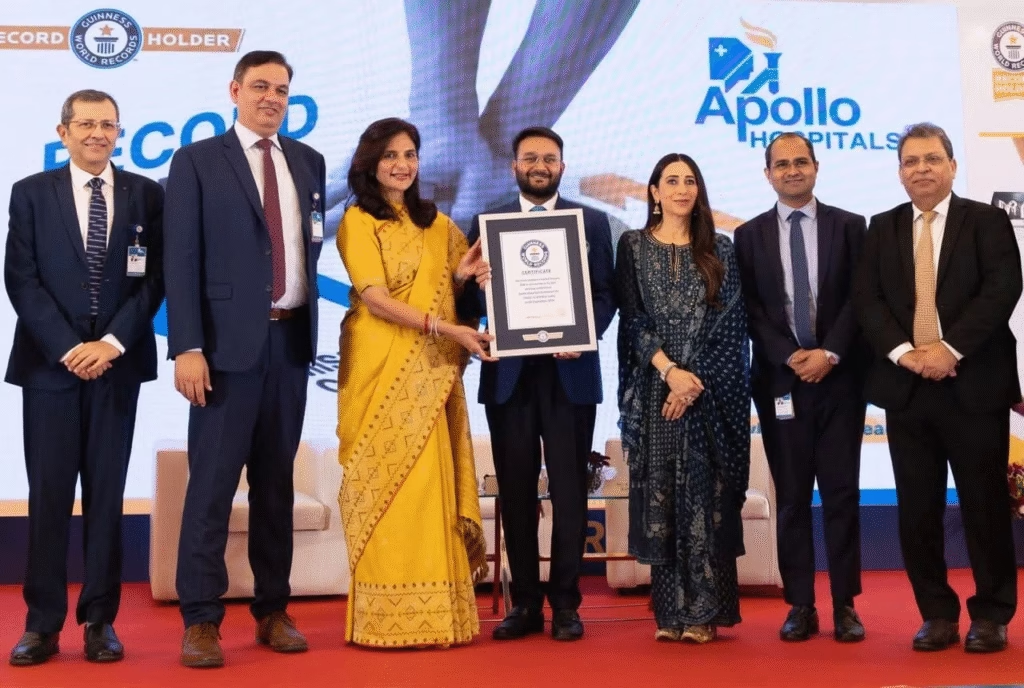
Apollo Hospitals Navi Mumbai has secured 61,221 pledges from people committing to learn cardiopulmonary resuscitation (CPR) as part of its month-long CPR Pledge Movement held from July 8 to August 7, 2026.
The initiative had set a target of 50,000 pledges and brought together participants from across Navi Mumbai. More than 120 institutions, including schools, colleges, workplaces and community organisations, took part in the campaign. Students, teachers, healthcare workers, employees, families and members of the community participated in the movement.
The campaign concluded with Guinness World Records recognising Apollo Hospitals Navi Mumbai for achieving the record for the ‘Most pledges received to learn CPR in one month’. The recognition was presented at an event attended by Dr Preetha Reddy, Executive Vice Chairperson, Apollo Hospitals Enterprise Limited, and actor Karisma Kapoor.
Dr Preetha Reddy said the achievement reflected the community’s participation in promoting CPR awareness and preparedness. She said the initiative forms part of Apollo Hospitals’ wider ‘My Hands Are Ready’ movement, which aims to encourage people across India to acquire basic life-saving skills.
According to estimates cited by Apollo Hospitals, more than 700,000 people die from sudden cardiac arrest in India each year. Studies have reported that bystander CPR is provided in only about 1.3%-9.8% of out-of-hospital cardiac arrest cases. Reported CPR capability among laypeople in urban populations is around 2%-6.5%, while survival to hospital discharge following out-of-hospital cardiac arrest remains below 2%-3%.
Through the ‘My Hands Are Ready’ initiative, Apollo Hospitals aims to increase awareness and preparedness among members of the public so they can take appropriate action during the critical period before professional medical assistance arrives.
Arunesh Punetha, Regional CEO – Western Region, Apollo Hospitals, said the campaign would be taken beyond Navi Mumbai to encourage more people across India to learn CPR and become prepared to respond during medical emergencies.
Dr Nitin Jagasia, Regional Director – Emergency, Western Region, Apollo Hospitals, highlighted that the first person present during a cardiac emergency is often a family member, colleague, friend or passer-by rather than a healthcare professional. He said early recognition of cardiac arrest and initiation of CPR can be important while emergency medical assistance is being arranged.
The movement is built around the idea that ordinary citizens can play an important role during medical emergencies when they have the knowledge and confidence to provide basic assistance until professional care becomes available.