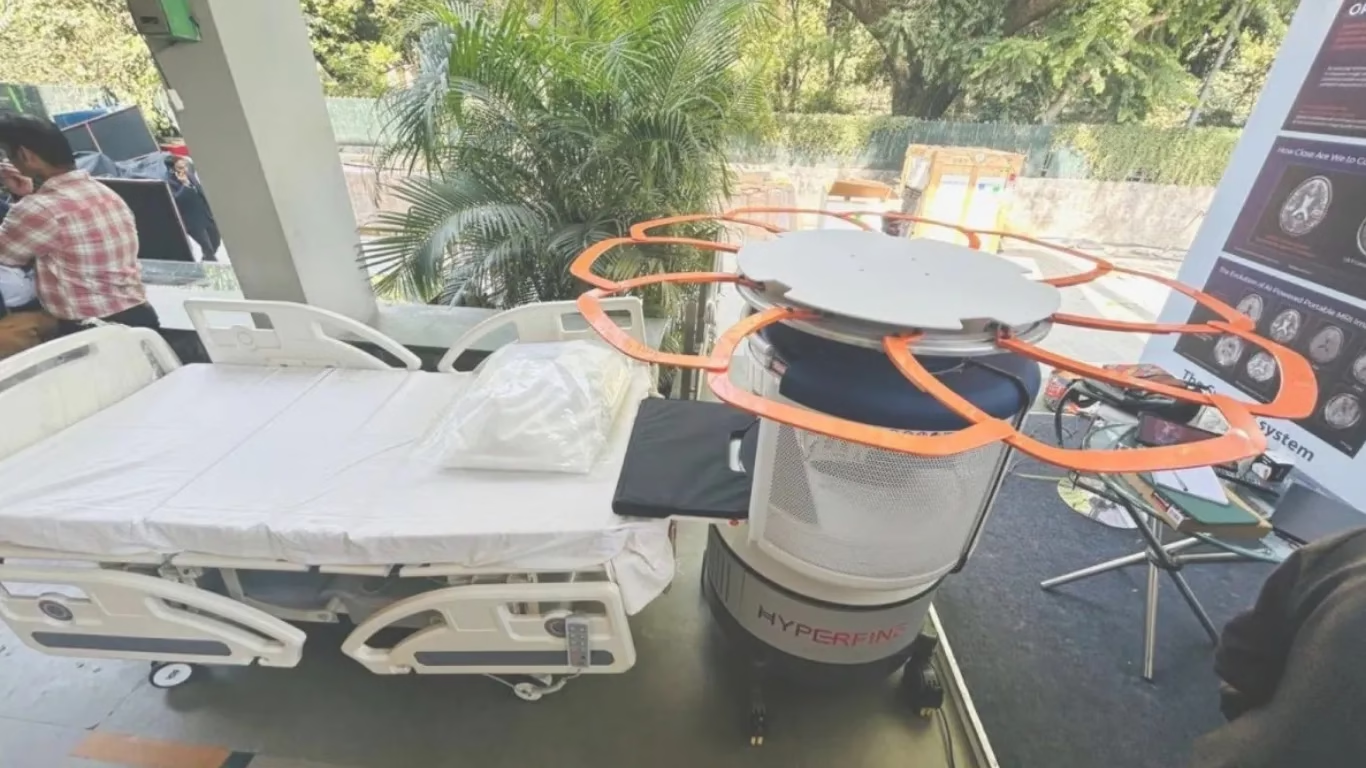
In a pioneering move, AIIMS New Delhi has launched the country’s first portable MRI system that can be used directly at a patient’s bedside. This innovation marks a major advancement in critical care and neurodiagnostics, allowing doctors to perform brain imaging without shifting critically ill patients out of intensive care settings.
Unlike traditional MRI machines that require specially designed rooms and patient transport, the new ultra–low-field device can be wheeled into ICUs, emergency units, and neurosurgical wards. This significantly reduces the risks associated with moving unstable patients and ensures imaging can be done safely within the care environment.
Globally, similar portable MRI systems are already being used in countries such as the United States, Canada, the United Kingdom, Australia, New Zealand, and parts of Europe. At AIIMS, the system is currently operational at the Centre for Neurological Conditions under the supervision of Dr Shailesh Gaikwad. It is expected to support quicker diagnosis and monitoring of conditions like stroke, traumatic brain injury, pediatric neurological disorders, and post-surgical cases.
The initiative, backed by Radiosurgery Global Ltd and approved by Indian regulators, is also expected to improve access to brain imaging and boost research in point-of-care neurodiagnostics.
Dr Gaikwad clarified that the portable MRI is not meant to replace conventional high-field MRI machines. Instead, it serves as a complementary tool in time-sensitive situations. While it offers lower image resolution, it provides sufficient detail for immediate clinical decision-making at the bedside.
He emphasized that for critically ill patients, especially those who cannot be safely moved, this technology offers a faster and safer alternative. In emergencies such as stroke or head trauma, delays in imaging can directly impact treatment outcomes. Conventional MRI systems require complex infrastructure and patient transport, which can lead to critical delays.
By bringing imaging directly to the patient, the portable MRI bridges this gap enabling timely diagnosis and intervention in ICUs, trauma centres, stroke units, and neonatal wards without the need for specialized setups or patient movement.