The All India Institute of Medical Sciences (AIIMS), New Delhi has become the first institution in India to formally announce the launch of a face transplantation programme, marking a significant milestone in advanced reconstructive surgery in the country.
The initiative is being spearheaded by the Department of Plastic, Reconstructive and Burns Surgery, which has begun creating a registry of patients with severe facial deformities and loss of essential functions such as breathing, blinking and mouth opening, particularly those who have not improved despite undergoing multiple surgeries.
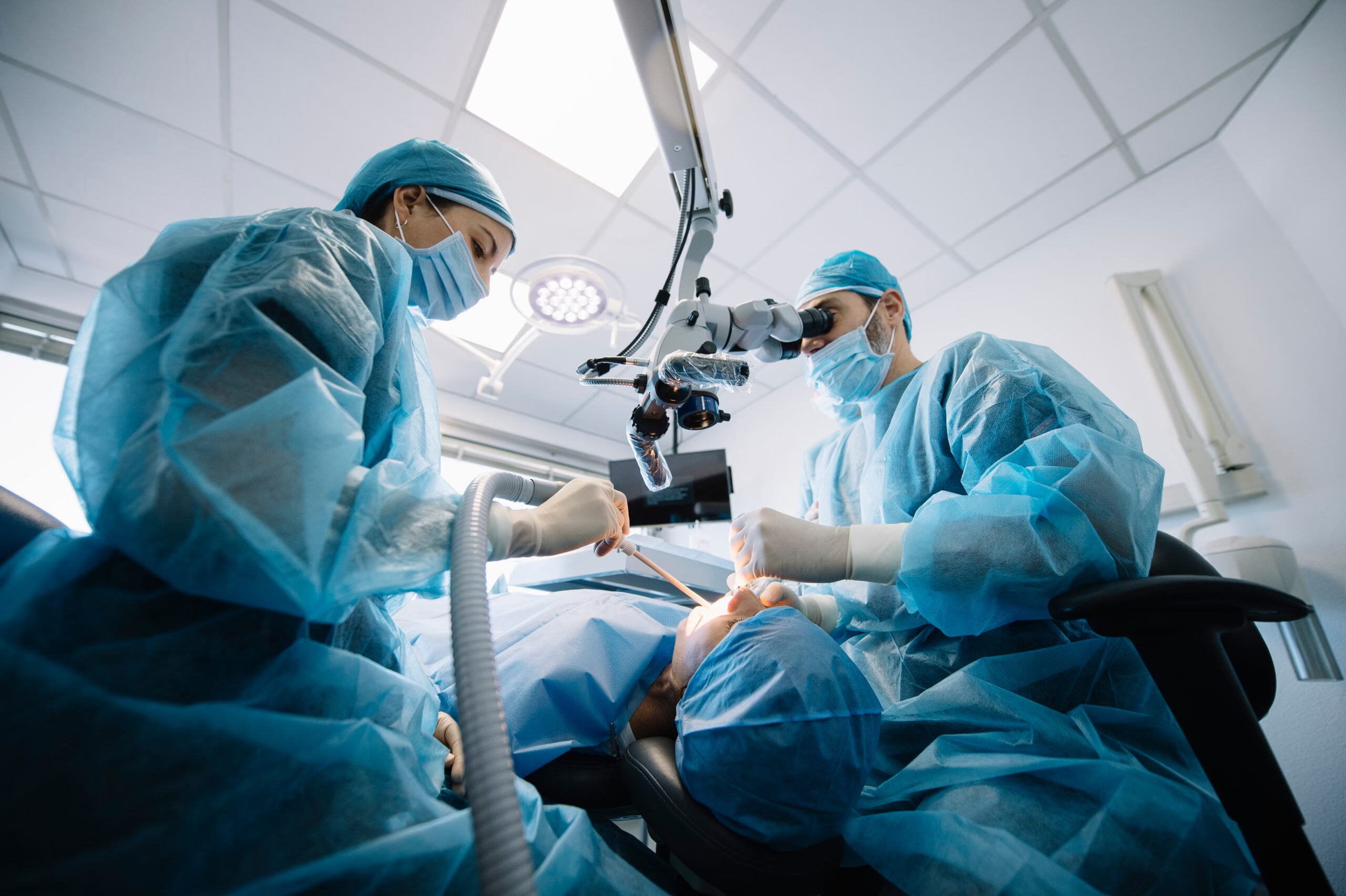
As part of preparations, the department is conducting an intensive cadaveric workshop and academic training programme from February 11 to 15 at the Burns and Plastic Surgery Block. During the workshop, facial skin was harvested from a brain-dead donor to facilitate hands-on training.
To strengthen the programme, AIIMS invited Dr Indranil Sinha, Associate Chief of Plastic Surgery at Brigham and Women’s Hospital, Harvard Medical School, Boston, an internationally recognised expert in composite tissue allotransplantation and face transplant surgery. The programme is being led by Dr Maneesh Singhal along with faculty members Dr Shashank Chauhan, Dr Raja Tiwari, Dr Rajkumar Manas, Dr Shivangi Saha and Dr Aparna Sinha.
The training includes cadaver-based practical sessions, focused academic lectures and interdisciplinary discussions involving departments such as ENT, Maxillofacial Surgery, Nephrology, Immunology, Pathology, Psychiatry, Critical Care, Anatomy and the Organ Retrieval Banking Organisation (ORBO).
Dr Singhal, Head of the Department of Plastic, Reconstructive and Burns Surgery, noted that many patients with severe facial injuries caused by acid burns, gunshot wounds and trauma continue to suffer even after undergoing 10 to 12 procedures. He emphasised that careful patient selection and counselling are critical, and that individuals who are unstable, unmotivated or suffering from active infections or cancers are not suitable candidates. He added that face transplantation is no longer experimental and that developing this capability at AIIMS will offer comprehensive functional and aesthetic rehabilitation to patients with limited alternatives.
Dr Sinha observed that AIIMS possesses infrastructure and surgical expertise comparable to global standards and pledged continued support. Dr Singhal also indicated plans to collaborate with Harvard Medical School to further strengthen the programme.
Face transplantation involves reconstructing all or part of a person’s face using tissue from a deceased donor to restore both function and appearance. Globally, around 80 such procedures have been performed so far, with the most recent reported in Spain earlier this month.
Dr Dipankar Bhowmick, Head of Nephrology, highlighted the critical role of lifelong immunosuppressive therapy in preventing graft rejection and said the necessary infrastructure is already in place at AIIMS. He noted that nephrologists will play a key role in managing both short-term and long-term immunological responses.
Faculty members from Plastic Surgery and Psychiatry departments also underscored the importance of prior experience in complex reconstructions, as well as continuous psychological counselling and rehabilitation throughout the treatment journey.
Dr Singhal reiterated that structured training, ethical preparedness and strong multidisciplinary collaboration are essential prerequisites before undertaking such complex procedures, and described the current workshop as a foundational step towards that objective.