


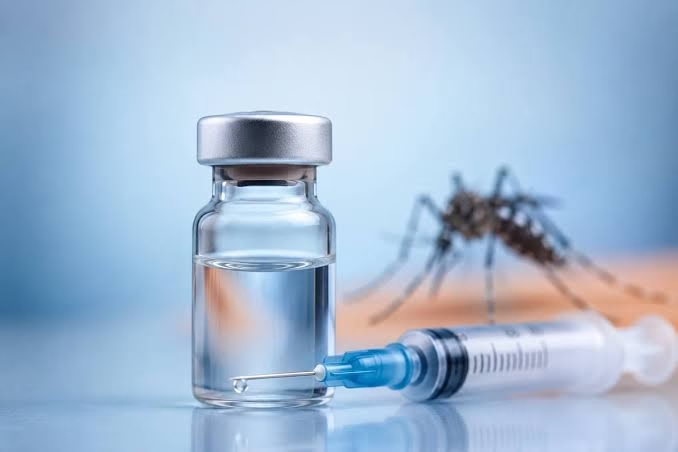
India has taken a major step in the fight against mosquito-borne diseases with the approval of its first dengue vaccine, QDENGA (TAK-003), developed by Takeda. Approved by the Drug Controller General of India (DCGI) on July 20, the vaccine is indicated for individuals aged 4 to 60 years and protects against all four dengue virus serotypes. It is administered in two doses, three months apart, and does not require pre-vaccination screening, making it the first dengue vaccine in India that can be used regardless of previous dengue infection. The company plans to launch the vaccine in the first half of 2027, with pricing yet to be announced.
With dengue vaccine approval now a reality, attention is shifting to another major mosquito-borne disease malaria. While India does not yet have an approved malaria vaccine for public use, global research has made significant progress, bringing hope for future prevention strategies.
Unlike dengue, malaria is caused by Plasmodium parasites, which have a complex life cycle involving both humans and mosquitoes. This complexity has made vaccine development far more challenging, with researchers working for decades on vaccines targeting different stages of the parasite.
Currently, the World Health Organization (WHO) has recommended two malaria vaccines RTS,S/AS01 (Mosquirix) and R21/Matrix-M for children living in areas with moderate to high malaria transmission, mainly in Africa. While RTS,S offers moderate protection, R21/Matrix-M has shown over 75% efficacy in clinical trials, making it one of the most promising malaria vaccines to date.
Scientists are also developing next-generation vaccines, including whole-sporozoite vaccines, blood-stage vaccines, and transmission-blocking vaccines, all aimed at preventing infection or interrupting transmission of the parasite.
Despite these advances, challenges remain. Malaria parasites exhibit high genetic diversity and multiple developmental stages, making it difficult to create a vaccine that offers broad, long-lasting protection. Existing vaccines primarily target Plasmodium falciparum and are currently recommended mainly for children in high-transmission settings.
India continues to report malaria cases, particularly during the monsoon season. Until an effective and widely available malaria vaccine becomes a reality in the country, experts stress that mosquito control, early diagnosis, prompt treatment, and preventive measures remain the most effective tools against the disease.
The approval of India’s first dengue vaccine represents a significant milestone in combating vector-borne diseases and raises optimism that continued advances in malaria vaccine research could eventually provide similar protection against one of the world’s oldest infectious diseases.