A team of Chinese and Russian surgeons has reportedly performed an experimental spinal cord transplant on a paralysed patient in Moscow, replacing a damaged section of the spinal cord with tissue from a brain-dead donor. While the procedure has been described as the world’s first human spinal cord transplant, its ability to restore neurological function remains unproven.
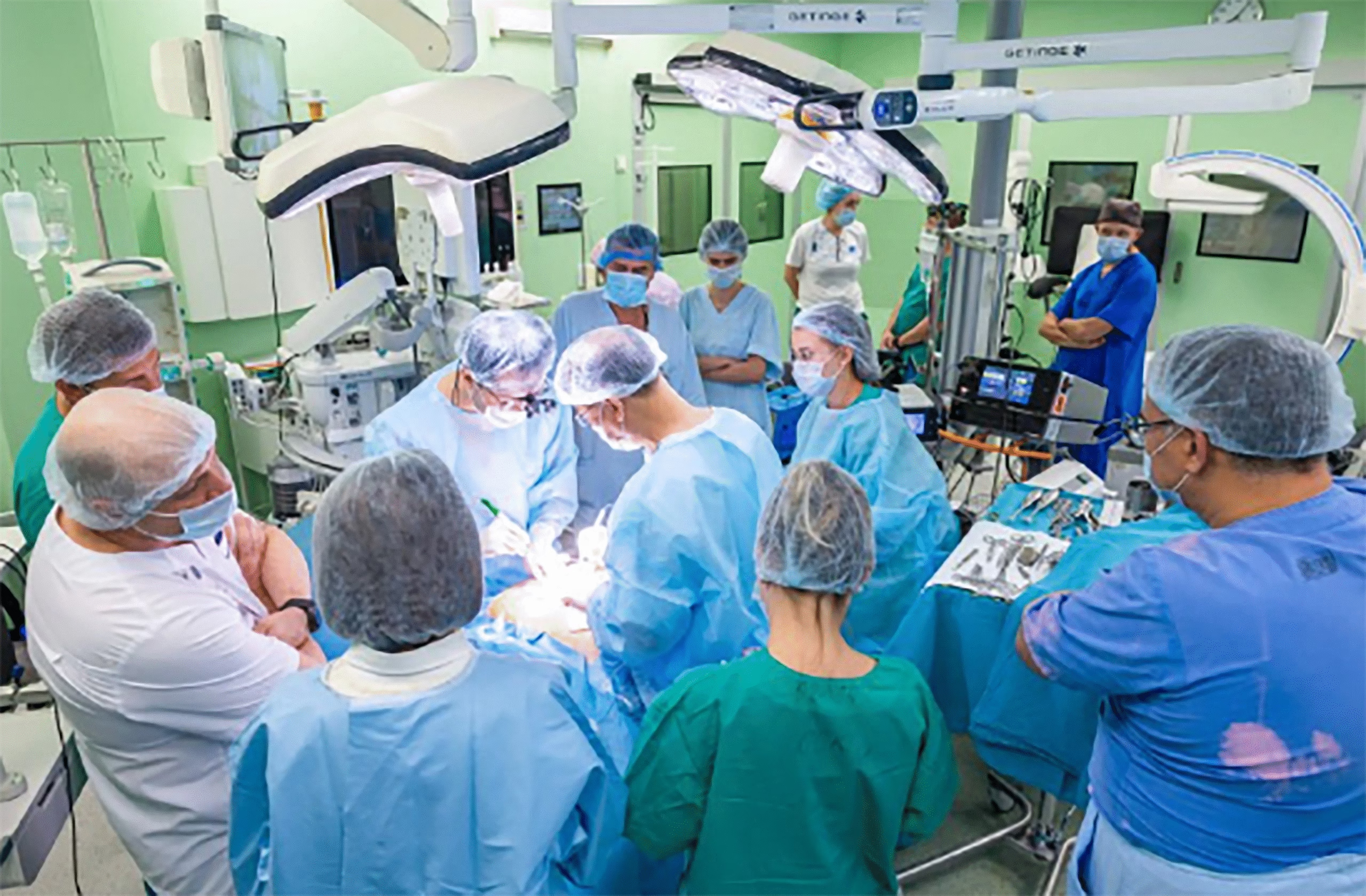
The 12-hour surgery was conducted on October 14-15 at the Sklifosovsky Research Institute for Emergency Medicine in Moscow. Chinese surgeon Ren Xiaoping, who participated in the operation, confirmed that the procedure was carried out jointly by specialists from Guangxi University of Chinese Medicine’s Second Affiliated Hospital and a Russian surgical team.
The patient had suffered a severe spinal cord injury three years earlier, resulting in paralysis.
Moscow Mayor Sergei Sobyanin acknowledged the operation on October 16, describing it as a development in spinal surgery. He stated that the patient was recovering well and had been given an opportunity for potential improvement.
However, researchers have cautioned that a stable postoperative condition does not establish whether the transplant has restored nerve communication or movement.
Surgeons Use Donor Tissue and PEG-Based Technique
During the procedure, surgeons reportedly removed the damaged portion of the patient’s spinal cord and inserted spinal cord tissue obtained from a brain-dead donor.
The surgical team used microsurgical techniques and polyethylene glycol (PEG), a chemical compound capable of promoting cell membrane fusion, to connect the transplanted tissue with the patient’s remaining spinal cord.
The approach aims to address one of the major challenges in spinal cord injury treatment: restoring communication between the brain and parts of the body affected by the injury.
Severe spinal cord damage interrupts the transmission of nerve signals, potentially causing permanent paralysis, sensory loss and other neurological complications.
Although PEG-based techniques have demonstrated experimental potential in animal studies, their effectiveness in restoring functional spinal cord connections in humans has not been established.
Scientists Raise Questions Over Neurological Recovery
Despite reports describing the operation as successful, independent researchers have questioned whether the transplanted tissue can establish functional connections with the patient’s nervous system.
Melissa Andrews, a neuroscientist at the University of Southampton, has reportedly raised concerns about the reliability of the supporting animal research and the potential risks associated with the technique.
Experts have highlighted several challenges, including nerve fibre reconnection, adequate blood supply to the transplanted tissue and possible immune rejection.
These complications are particularly significant in patients with longstanding spinal cord injuries, where scar tissue and changes in neural pathways may create additional barriers to recovery.
Clinical Evidence and Long-Term Outcomes Awaited
The surgical team has not publicly provided detailed neurological assessments demonstrating improvements in movement, sensation or communication between the brain and spinal cord below the transplanted section.
Information about the precise location of the transplant, the patient’s neurological condition before and after surgery, and the extent of any functional recovery also remains unavailable.
Furthermore, no peer-reviewed clinical publication documenting the procedure and its outcomes has been released.
Ren has stated that the patient was informed about the potential risks and possible surgical outcomes and that their current condition is satisfactory.
The reported procedure represents an experimental approach to treating severe spinal cord injuries. However, its clinical effectiveness will require neurological testing, independent scientific evaluation and long-term monitoring.
Until measurable neurological recovery is demonstrated, the operation cannot be considered evidence that spinal cord transplantation can reverse paralysis.