
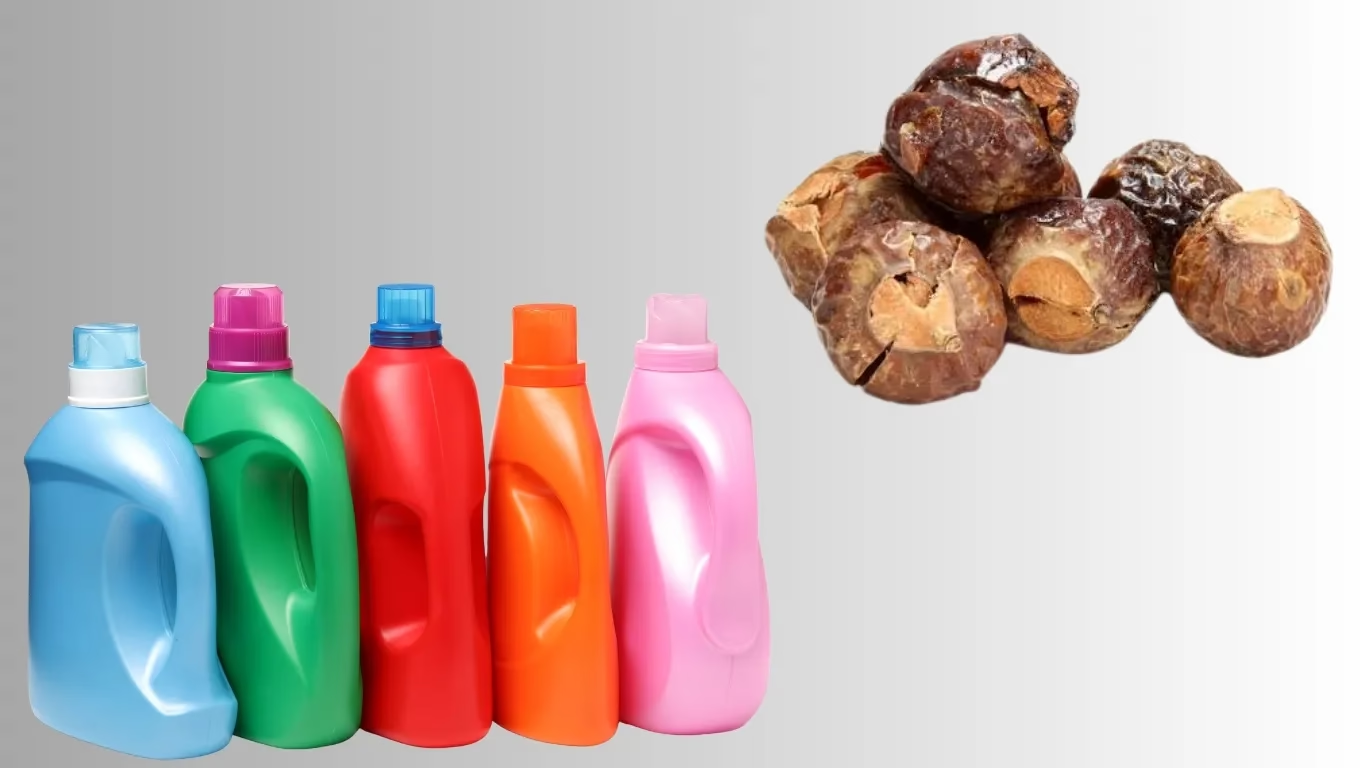
Reetha, a traditional Indian plant-based cleaning ingredient, is being marketed in the United States as a natural alternative to conventional laundry detergents, with some retail listings reportedly exceeding Rs 5,000 per kilogram according to some social media videos. The growing interest in soapnut berries highlights opportunities for Indian producers in international markets while also raising questions about cleaning effectiveness, product safety and the risks associated with certain chemical detergents.
From Traditional Indian Ingredient to Premium US Product
Reetha, commonly known as soapnut, has been used in India for generations for washing clothes, cleaning household items and hair care. The dried fruit contains saponins, naturally occurring compounds that produce a soap-like effect when mixed with water.
According to market claims circulating online, reetha can be purchased in some Indian wholesale markets for approximately Rs 10-30 per kilogram, while export quotations may range from Rs 60-200 per kilogram, depending on quality and processing.
In comparison, certain US retail products are reportedly priced at around USD 25 for a 16-ounce package, equivalent to approximately USD 55 per kilogram.
Brands such as NaturOli, Eco Nuts and Ecozone have marketed soapnut-based cleaning products to consumers seeking plant-derived alternatives to conventional detergents.
These price comparisons are indicative and require verification against current listings, product grades and wholesale market rates.
How Reetha Is Used for Laundry
Soapnut berries are marketed as reusable laundry-cleaning agents. Product instructions commonly recommend placing five or six dried berries inside a small cotton or muslin pouch, soaking them in warm water and adding the pouch to a washing machine.
Some manufacturers claim that the same berries can be reused for four to seven washing cycles, depending on water temperature, washing conditions and the product.
However, the effectiveness of soapnuts compared with conventional laundry detergents remains a subject of debate. Cleaning performance may vary depending on the type of stains, water hardness and washing conditions.
Detergent Poisoning Highlights Household Safety Concerns
The discussion surrounding natural cleaning products also brings attention to the potential health risks associated with accidental exposure to certain household detergents.
According to the US National Library of Medicine’s MedlinePlus, detergent poisoning can occur when individuals swallow harmful detergent formulations, particularly products containing corrosive or irritating ingredients.
Depending on the formulation and severity of exposure, symptoms may include irritation or burns affecting the mouth, throat and digestive tract, vomiting, abdominal pain, breathing difficulties and, in severe cases, circulatory shock.
Some concentrated detergent products may cause serious injury if swallowed or improperly handled.
Medical guidance recommends seeking immediate assistance following suspected poisoning and avoiding induced vomiting unless specifically instructed by a healthcare professional or poison control specialist.
However, these risks should not be interpreted as evidence that all conventional detergents are equally hazardous or that plant-based cleaning products are automatically safer. Soapnut preparations may also cause irritation or allergic reactions in some individuals.
Growing Market for Plant-Based Cleaning Products
Demand for environmentally conscious household products has encouraged manufacturers to explore plant-derived cleaning ingredients.
Reetha is sourced from parts of India and Nepal, including Himalayan foothill regions, where collection from naturally growing trees supports local trading networks.
Market estimates cited in promotional discussions suggest that the global organic laundry detergent segment could experience significant growth through 2030. However, specific projections of 14% annual growth and an approximately USD 8 billion market size require confirmation from published market research.
The expanding market could create opportunities for Indian businesses involved in harvesting, processing, packaging and developing value-added products.
Potential applications include liquid laundry cleaners, powdered formulations, shampoos and other personal-care products.
Need for Scientific Validation and Product Standardisation
Despite increasing commercial interest, natural cleaning products require appropriate evaluation for safety, effectiveness and quality.
Product developers need to assess cleaning performance, microbial contamination, skin compatibility, storage stability and the consistency of active ingredients.
Experts also distinguish between naturally derived ingredients and claims that products are completely chemical-free, as both natural and synthetic substances are composed of chemicals.
For Indian manufacturers, improving processing standards, supporting scientific testing and developing reliable formulations could help create higher-value products for domestic and international markets.
The growing visibility of reetha in overseas markets demonstrates how a traditional Indian cleaning ingredient is being repositioned for modern consumers. Its long-term commercial potential, however, will depend on demonstrated performance, consumer safety, sustainable sourcing and product quality.