Scientists at the Indian Institute of Technology (BHU), Varanasi, have developed a light-activated antibacterial technology that could offer a new approach to tackling bacterial infections, biofilms and infected wound healing.
The findings, published in Communications Chemistry, a journal under the Nature Portfolio, describe the use of osmium-based metallophotoantibiotics that become active under green light to inhibit bacterial growth.
The research was conducted jointly by teams led by Dr. Samya Banerjee, Associate Professor in the Department of Chemistry, and Dr. Sudip Mukherjee of the School of Biomedical Engineering at IIT (BHU).
Green Light Triggers Antibacterial Activity
The researchers developed three compounds, named Os1, Os2 and Os3, designed to produce antibacterial effects when exposed to green light. Following activation, the compounds generate reactive oxygen species (ROS), which can damage bacterial cells and disrupt essential cellular processes.
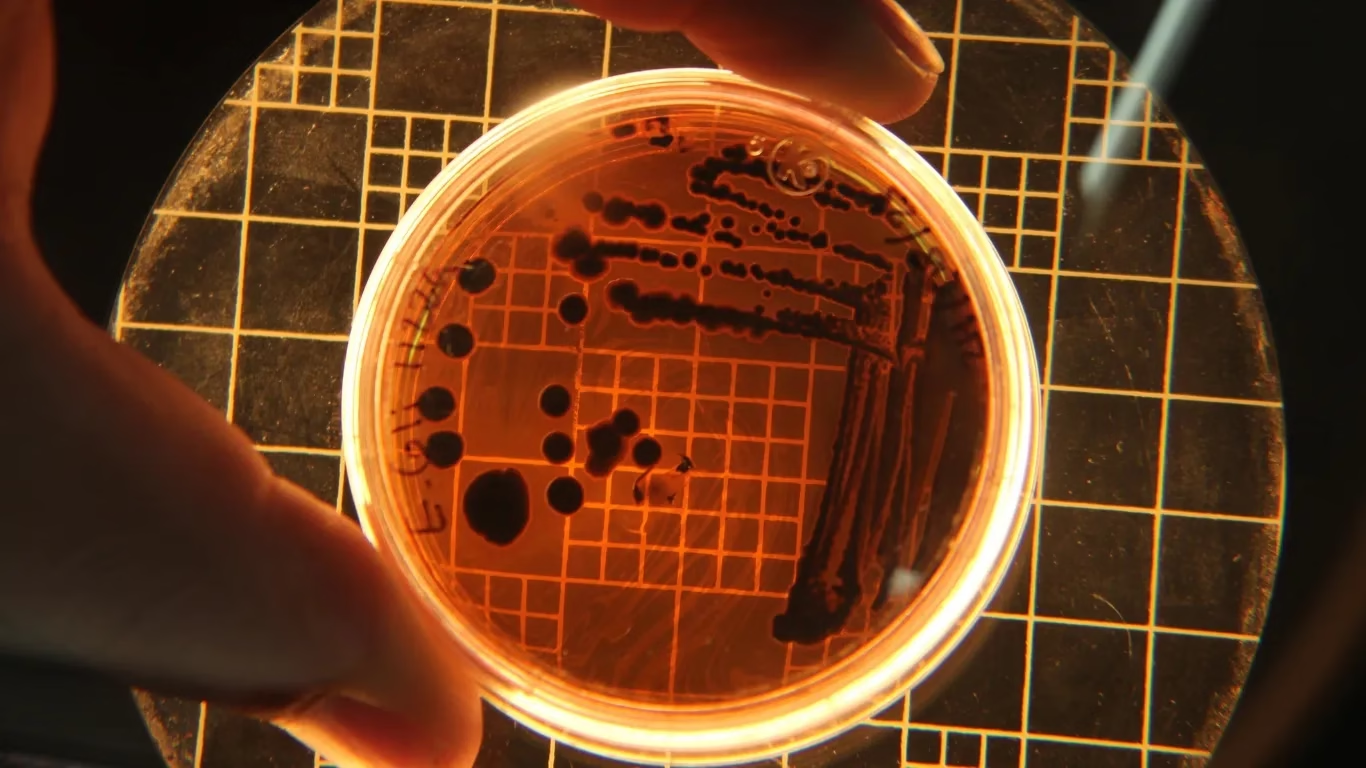
The team tested the compounds against three bacterial species: Escherichia coli, Staphylococcus aureus and Bacillus subtilis. All three compounds demonstrated antibacterial activity under green-light exposure, with Os1 identified as the most promising candidate among those evaluated.
Potential to Disrupt Bacterial Biofilms
The study also examined the compounds’ effectiveness against bacterial biofilms. These are protective communities of bacteria that can develop on surfaces, including medical devices, and make infections more difficult to treat.
In laboratory experiments, green-light-activated Os1 inhibited biofilm formation by approximately 85% in E. coli and Bacillus subtilis. The finding points to a potential application in addressing infections associated with bacterial biofilms, which can be difficult to eliminate using conventional treatments.
Wound-Healing Potential Evaluated
The researchers also investigated the technology for infected wound healing in rat studies. The findings indicate potential for combining light-activated antibacterial activity with wound-healing applications.
The research is relevant to ongoing efforts to develop alternative approaches for managing bacterial infections amid concerns over antimicrobial resistance. However, the technology remains at the research stage, and further studies would be needed to establish its safety, effectiveness and suitability for human clinical use.
The research team included Apurba Mandal, Debay Chakraborty, Arif Ali Mandal, Rohit Pandey, Ashish Kumar Agrawal, Rashi Gautam and Sweety Tiwari. The study brings together chemistry, biomedical engineering and pharmaceutical engineering to explore a potential new direction in antibacterial treatment.