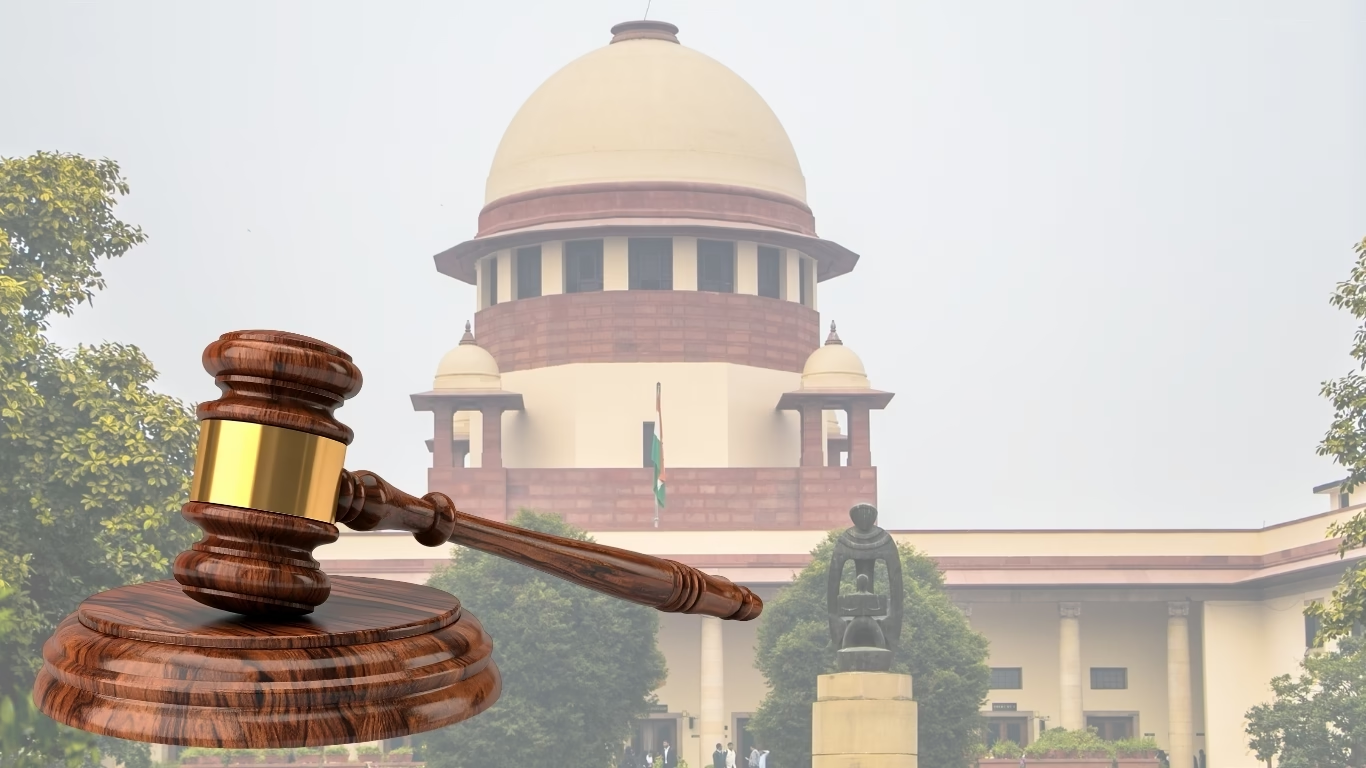

The Supreme Court has kept intact the long-standing legal framework that allows patients to approach consumer courts against doctors and hospitals for deficiency in medical services.
The decision follows the court’s refusal to reopen its 1995 judgment in Indian Medical Association vs V.P. Shantha, which brought medical services provided for consideration within the ambit of consumer protection law.
A five-judge bench declined to exercise its limited curative jurisdiction, effectively closing the latest attempt to unsettle the Shantha ruling. The judgment has governed medical consumer litigation in India for more than three decades.
The issue gained prominence after a May 2024 ruling by a two-judge bench held that lawyers could not be proceeded against before consumer courts for alleged deficiency in service. While examining the issue, the bench had observed that the Shantha judgment deserved reconsideration and referred the broader question for examination.
The Supreme Court had also noted in 2024 that whether professionals other than lawyers could be brought under consumer law could be considered in an appropriate case based on a proper factual foundation.
While refusing to disturb the medical services framework, the court highlighted the distinct relationship between doctors and patients. Medical professionals therefore continue to remain answerable under consumer protection law where deficiency in medical service is alleged.
At the same time, medical negligence claims remain subject to established judicial standards. The Supreme Court has repeatedly relied on the Bolam Test, under which a doctor is generally not considered negligent when the treatment provided is consistent with a practice accepted by a responsible body of medical professionals.
The principle was endorsed in India in Jacob Mathew vs State of Punjab in 2005. The ruling held that medical negligence requires a failure to possess or exercise the level of skill and competence reasonably expected from a medical professional.
The latest Supreme Court position means patients retain the right to seek consumer-law remedies against doctors and hospitals for alleged deficiencies in medical services, while medical professionals continue to receive protection from liability where treatment meets accepted standards of professional practice.