
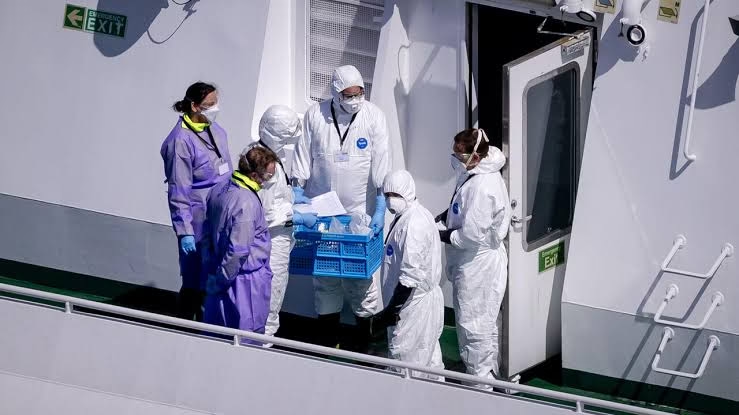
The World Health Organization (WHO) has officially declared the hantavirus outbreak linked to the cruise ship MV Hondius over, following the completion of quarantine and negative testing of the final identified contact.
The outbreak, which raised international health concerns, resulted in 12 confirmed cases and one probable case of hantavirus infection, claiming three lives.
Speaking at a press briefing on July 2, WHO Director-General Tedros Adhanom Ghebreyesus announced that the last individual exposed to the virus aboard the MV Hondius had completed quarantine, tested negative, and safely returned home.
“No additional cases have been reported since May 25,” Tedros said, adding that the WHO now considers the outbreak officially concluded.
The Dutch-registered expedition cruise ship departed from Ushuaia, Argentina, on April 1, visiting several remote South Atlantic islands, including Tristan da Cunha, before proceeding to Tenerife in Spain’s Canary Islands, where remaining passengers were evacuated. The vessel eventually docked in Rotterdam, the Netherlands, on May 18 and resumed operations on May 30 after undergoing extensive cleaning and disinfection.
According to the WHO, health authorities tracked and monitored more than 650 contacts across 33 countries and territories during the outbreak response.
Although the immediate public health emergency has ended, the WHO emphasized that research into hantaviruses remains a priority. Tedros said the organization is coordinating a study involving 21 countries to better understand disease progression and support the development of improved diagnostics, treatments, and vaccines.
Hantavirus is a rare rodent-borne disease for which no specific treatment or vaccine currently exists. The Andes strain, responsible for the MV Hondius outbreak, is the only known hantavirus capable of transmitting from person to person.
Initial investigations suggested that a passenger may have contracted the virus while traveling in hantavirus-endemic areas of Argentina. However, Argentina’s health ministry later reported that investigations in a second province failed to identify any infected rodents.
WHO’s head of high-impact epidemics, Diana Rojas Alvarez, noted that while the cruise ship outbreak no longer poses a public health threat, hantaviruses continue to present risks in parts of South America and other endemic regions.
She stressed the importance of continued surveillance, preparedness efforts, and community engagement to prevent future outbreaks, stating that work on hantaviruses must continue in the long term.
The WHO also expressed hope that the outbreak would encourage member states to finalize the remaining elements of the Pandemic Agreement later this month, allowing it to become fully operational.