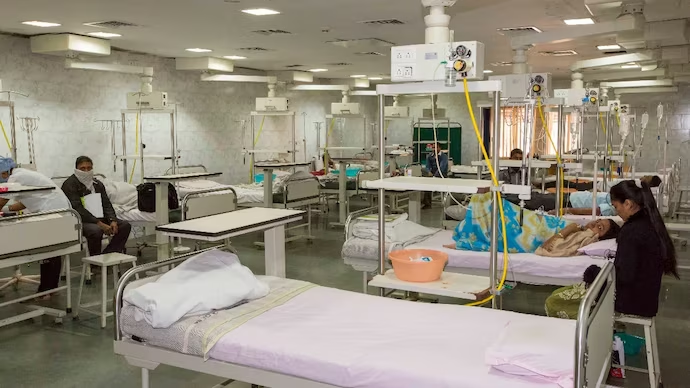
As part of efforts to decentralise cancer care and make treatment more accessible, 466 Day Care Cancer Centres (DCCCs) are now functional across the country, according to sources in the Union Health Ministry. The expansion reflects steady progress in strengthening district-level chemotherapy services and reducing the burden on tertiary hospitals.
The initiative was announced in the Union Budget 2025-26, with the government committing to establish DCCCs in district hospitals over a three-year period. Of these, 200 centres are slated to be set up during the current financial year. The move comes in response to the rising cancer burden and the need to bring routine chemotherapy services closer to patients’ homes.
Health ministry sources said the objective is to decentralise scheduled chemotherapy and minimise repeated travel to large tertiary cancer hospitals. Cancer treatment often requires multiple cycles spread over several months, making frequent hospital visits unavoidable. For patients from rural areas and economically weaker sections, the cost of travel, accommodation, food, and wage loss often for both the patient and a caregiver can significantly increase the financial strain on households.
By enabling chemotherapy services at district hospitals, the DCCC model reduces travel distances and indirect expenses while ensuring continuity of care. Patients are initially diagnosed and their treatment plans finalised at tertiary care cancer centres or state cancer institutes. The first chemotherapy cycle is administered at these mentor institutions, and once the patient is stabilised, subsequent cycles are delivered at the district-level centres. In case of complications, patients are referred back to higher centres, ensuring safety and coordinated care.
Before sanctioning new centres, a detailed gap analysis was conducted in consultation with states and Union Territories, taking into account cancer burden, patient load, and infrastructure readiness. Capacity building has been central to the programme, with medical officers and nurses from selected districts undergoing four to six weeks of structured, hands-on training at government medical colleges, regional cancer centres, and other tertiary oncology institutes.
Training covered chemotherapy administration, dose calculation, management of side effects, emergency response, infection control, safe handling of cytotoxic drugs, biomedical waste management, counselling, and referral coordination. The initiative also ensures the free provision of essential chemotherapy medicines at public health facilities, significantly reducing out-of-pocket expenditure for patients.
According to ministry sources, the DCCC initiative represents a comprehensive, patient-focused reform aimed at strengthening cancer care delivery at the grassroots level while maintaining uniform standards of treatment across the country.