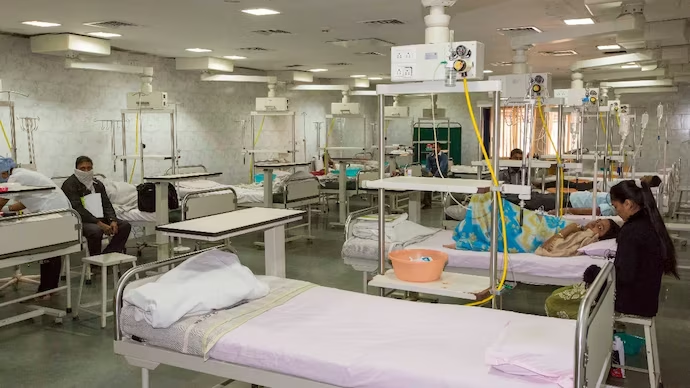
Nearly a year after the government cleared the establishment of day-care cancer centres (DCCCs) in district hospitals for FY26, only about one-third of them have become functional.
According to a written reply by the Union Health Ministry in Parliament, 102 out of the 297 approved centres are currently operational across 16 states and Union Territories translating to roughly 34 per cent implementation.
Several states have fully activated the centres sanctioned to them. Telangana (27), Karnataka (16), Rajasthan (8), Haryana (5) and Tripura (3) have achieved a 100 per cent operational rate. Himachal Pradesh, Bihar and Assam have also made notable progress, bringing more than half of their allotted centres into service.
However, some of the country’s high cancer-burden states including Uttar Pradesh, Maharashtra and Jharkhand have not operationalised any of their approved centres so far. Overall, 14 of the 30 states and UTs that received approval for DCCCs are yet to make a single centre functional.
Officials indicated that the original plan for FY26 was to set up 200 centres, but this was later expanded to 297 after need-based assessments identified gaps in cancer care delivery, particularly in high-burden regions. A gap analysis conducted by the ministry flagged shortages of trained manpower, inadequate training systems and weak referral linkages between different levels of healthcare facilities as key bottlenecks.
The Centre has earmarked ₹2.41 crore per new day-care centre and aims to establish 450 DCCCs by the end of FY27. The initiative forms part of a larger strategy to expand cancer care infrastructure across the country.
In the Union Budget last year, Finance Minister Nirmala Sitharaman announced plans to set up day-care cancer centres in all district hospitals approximately 750 nationwide by FY28. The move comes amid a rising cancer burden, with India reporting over 1.5 million new cases and more than 900,000 deaths in 2025. Experts warn that the numbers are expected to grow sharply in the coming years.
The DCCCs are designed to operate under a hub-and-spoke model, linking district hospitals to state cancer institutes or medical colleges. This structure is intended to ensure adherence to treatment protocols, streamline drug supply, facilitate tele-mentoring and enable timely referrals for advanced care.
Health experts say faster operationalisation is crucial to easing the load on tertiary care hospitals. While complex surgeries and advanced procedures require specialised centres, routine chemotherapy can be delivered closer to patients’ homes once protocols are standardised.
Dr Mandeep Singh Malhotra, director of surgical oncology at CK Birla Hospital, Delhi, noted that decentralised chemotherapy services can significantly reduce financial stress and emotional strain on families. Another oncologist based in Delhi pointed out that overcrowding at tertiary hospitals often forces patients to spend long hours for each chemotherapy cycle, affecting both hospital resources and family life.
By enabling same-day chemotherapy at district-level facilities, the government aims to cut travel time, limit wage losses and reduce out-of-pocket expenditure for cancer patients, while improving overall access to care.