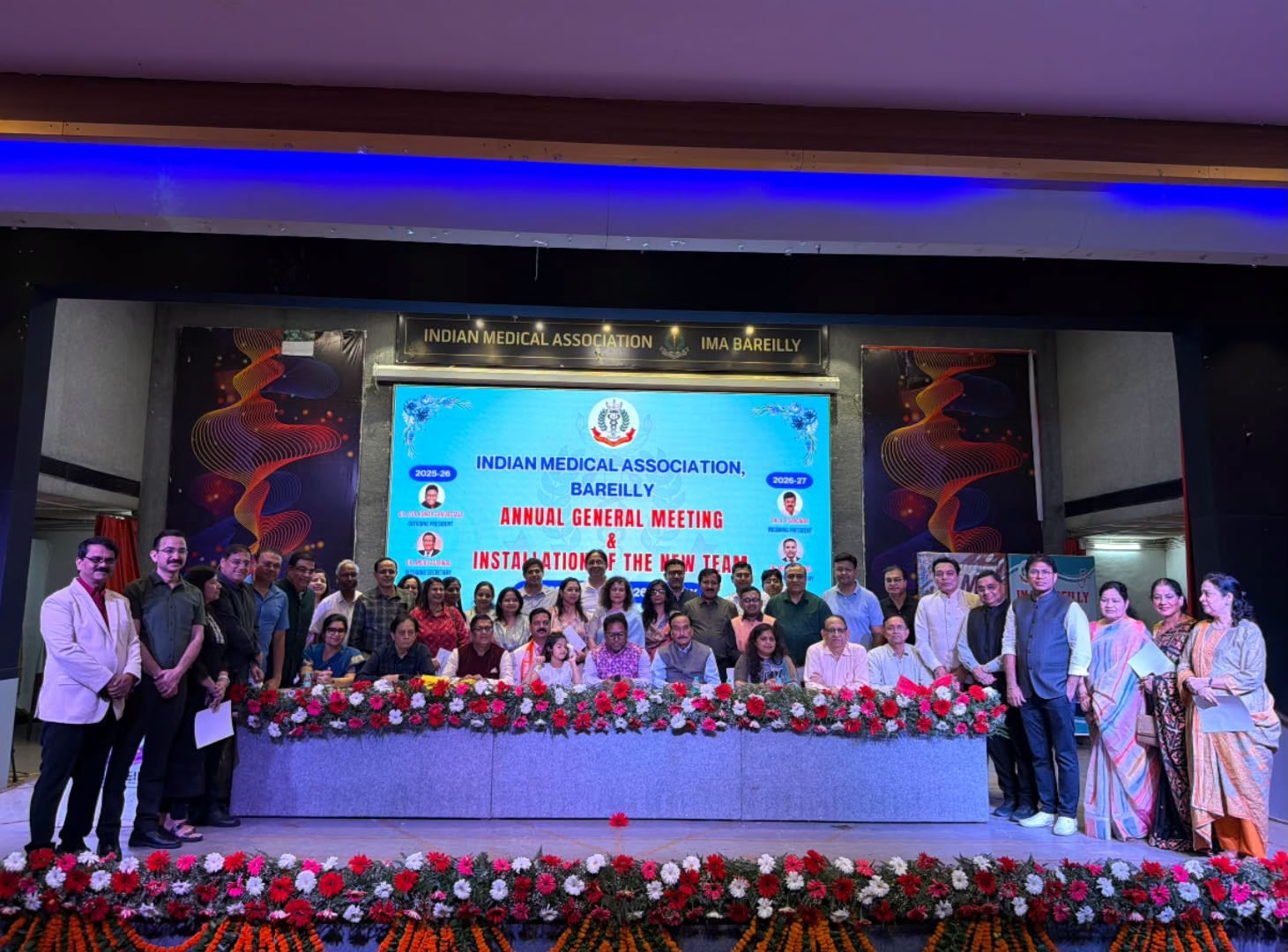

The Indian Medical Association (IMA) has submitted a detailed memorandum to Union Finance Minister Nirmala Sitharaman, urging the Government of India to significantly increase public health spending and introduce wide-ranging policy reforms to strengthen the country’s healthcare system.In the latest communication dated January 23, 2026, IMA emphasized that achieving the vision of Viksit Bharat 2047 must pass through the goal of a Swasth Bharat, stating that health investment is directly linked to economic growth and national productivity.
IMA has called for a phased increase in public health expenditure to 5% of GDP by 2030, with an immediate rise to 2.5% in the upcoming budget. The association noted that current combined government health spending ranges between 1.1% and 1.9% of GDP, which it described as among the lowest globally. It also highlighted that India’s overall health spending is about 3.8% of GDP, with household s bearing nearly 63% of expenses through out-of-pocket payments, pushing millions into poverty annually.
The association strongly advocated a tax-funded Universal Health Care (UHC) system, arguing that contributory insurance models provide incomplete coverage. It recommended a basic health package for all citizens across primary, secondary, and tertiary care, with government hospitals receiving direct funding and the private sector engaged through strategic purchasing.IMA also proposed linking Health Savings Accounts with Jan Dhan accounts to empower families to manage healthcare expenses, supported by tax incentives and government subsidies.
Highlighting a shortage in hospital bed capacity, IMA said India needs 2.4 million additional beds to meet WHO norms. It sought infrastructure status for hospital projects, long-term loans with interest subsidies, viability gap funding, tax incentives for Tier 2 and Tier 3 city hospitals, and credit-linked capital subsidies for small and medium hospitals.
IMA raised serious concerns about the functioning of the Pradhan Mantri Jan Arogya Yojana (PMJAY), stating that third-party payer systems are leading to delayed payments, suboptimal package rates, and financial strain on small and mid-sized hospitals. It urged the government to adopt an assurance-based model, introduce direct benefit transfers (DBT), realistic package pricing linked to medical inflation, and penal interest on delayed payments.The association further called for a review of IRDAI regulations and the National Health Claims Exchange (NHCX), alleging that current frameworks are “payor-centric” and adversely affect patient care.
Among tax-related demands, IMA sought NIL GST on life-saving medical equipment, full refund of GST paid by healthcare facilities on essential purchases, and GST exemption on all vaccines. It specifically recommended subsidies or financial assistance to support HPV vaccination for cervical cancer prevention. It also advocated promoting domestic capital mobilization and indigenous manufacturing under “Make in India” and “Heal in India” initiatives.
Further the association proposed creating a National Healthcare Fund to support healthcare entrepreneurs and hospital expansion, while ensuring clinical decision-making remains independent of commercial pressures. It also called for dedicated funding to promote medical innovation and start-ups in medical colleges across the country.