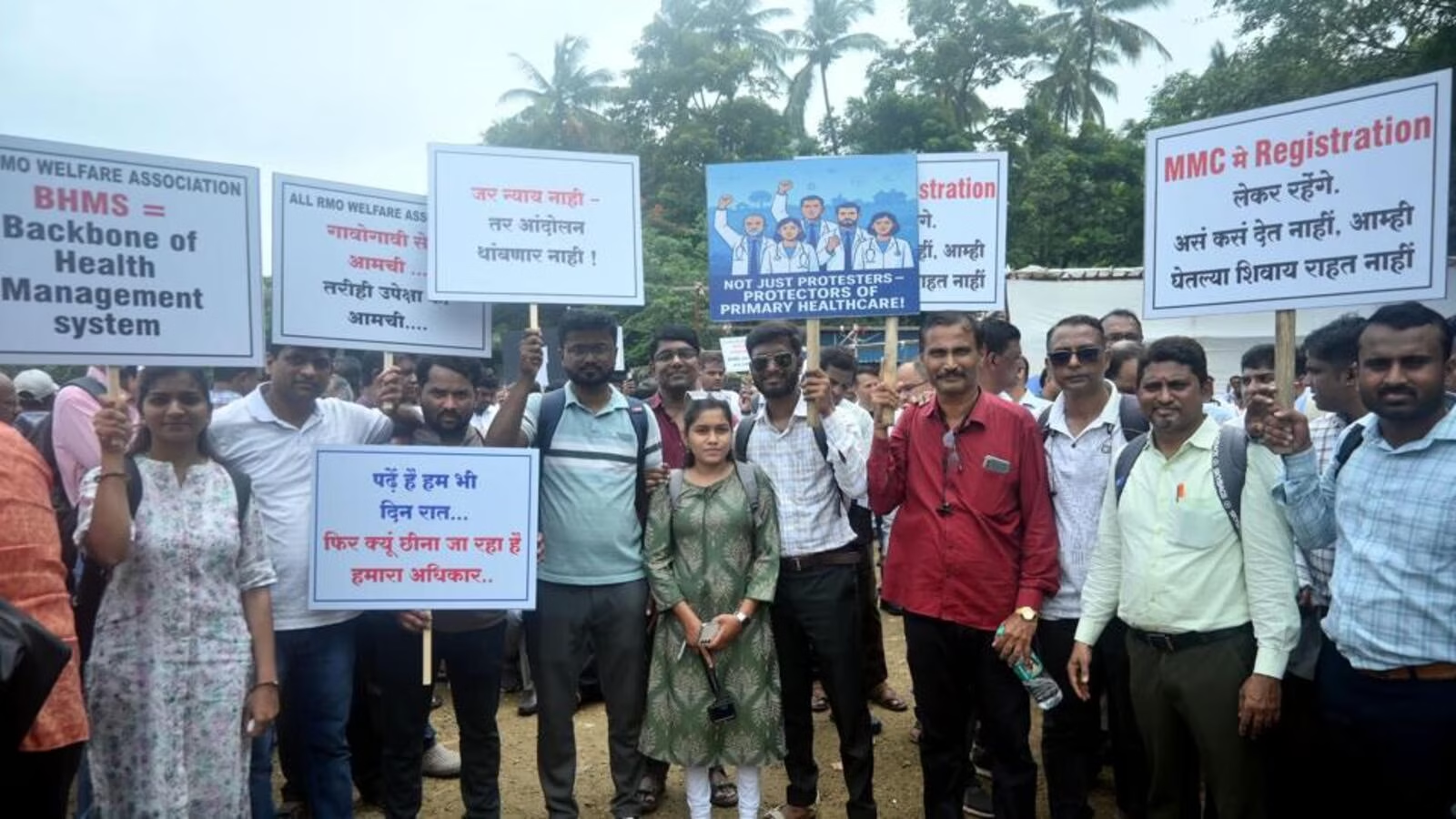
Healthcare services across Maharashtra were disrupted on September 17 as nearly 1.8 lakh doctors went on a daylong strike called by the Indian Medical Association (IMA) Maharashtra. The protest was sparked by a September 5 government resolution permitting homoeopathic practitioners who complete a one-year Certificate Course in Modern Pharmacology (CCMP) to register with the Maharashtra Medical Council (MMC) and prescribe certain allopathic medicines.
While emergency services remained operational, hospitals, medical colleges, and private clinics across the state participated. Resident doctors’ associations, including Central MARD and BMC MARD, also joined, reflecting widespread opposition within the medical community.
The state government has defended the move, saying it will help tackle doctor shortages in rural and underserved areas. However, doctors argue it threatens patient safety and medical education standards. IMA Maharashtra president Dr. Santosh Kadam warned that undertrained practitioners could cause misdiagnosis, adverse drug reactions, and rising antibiotic resistance.
Medical associations also cautioned that creating a dual registration system could confuse patients and weaken trust in doctors. They fear the step may encourage other alternative medicine practitioners, such as Ayurveda or Unani, to demand similar recognition.
The policy has also raised concerns for medical students and graduates, with experts warning that condensing pharmacology into a one-year course undermines the rigor of the MBBS degree and could impact India’s global medical credibility.
The government has already begun granting separate registrations to CCMP-qualified homoeopaths but has promised stakeholder consultations. With IMA and other bodies warning of nationwide mobilisation, the standoff between healthcare access and professional standards is set to continue.