Public health specialists, environmental activists, government representatives, and civil society members have strongly advocated for eliminating mercury-based medical devices like thermometers and sphygmomanometers in India.
They came together in Guwahati on Friday (August 22) at a workshop organized by Consumer Voice, New Delhi, and the Consumers’ Legal Protection Forum, Assam (CLPFA), in collaboration with the North Eastern Regional Institute of Management.
The discussion centered on the risks of mercury exposure in households particularly for children and women and India’s obligations under the Minamata Convention on Mercury. This United Nations treaty, named after the Japanese city of Minamata, seeks to safeguard human health and the environment from mercury pollution and emissions.
Gautam Krishna Mishra, Member Secretary of the Assam Pollution Control Board, underlined the need for stringent bio-medical waste management. Every healthcare facility must adopt proper mercury spill response systems, train staff, and transition to safer mercury-free devices. Responsible practices today will shield future generations from irreversible damage, he noted.
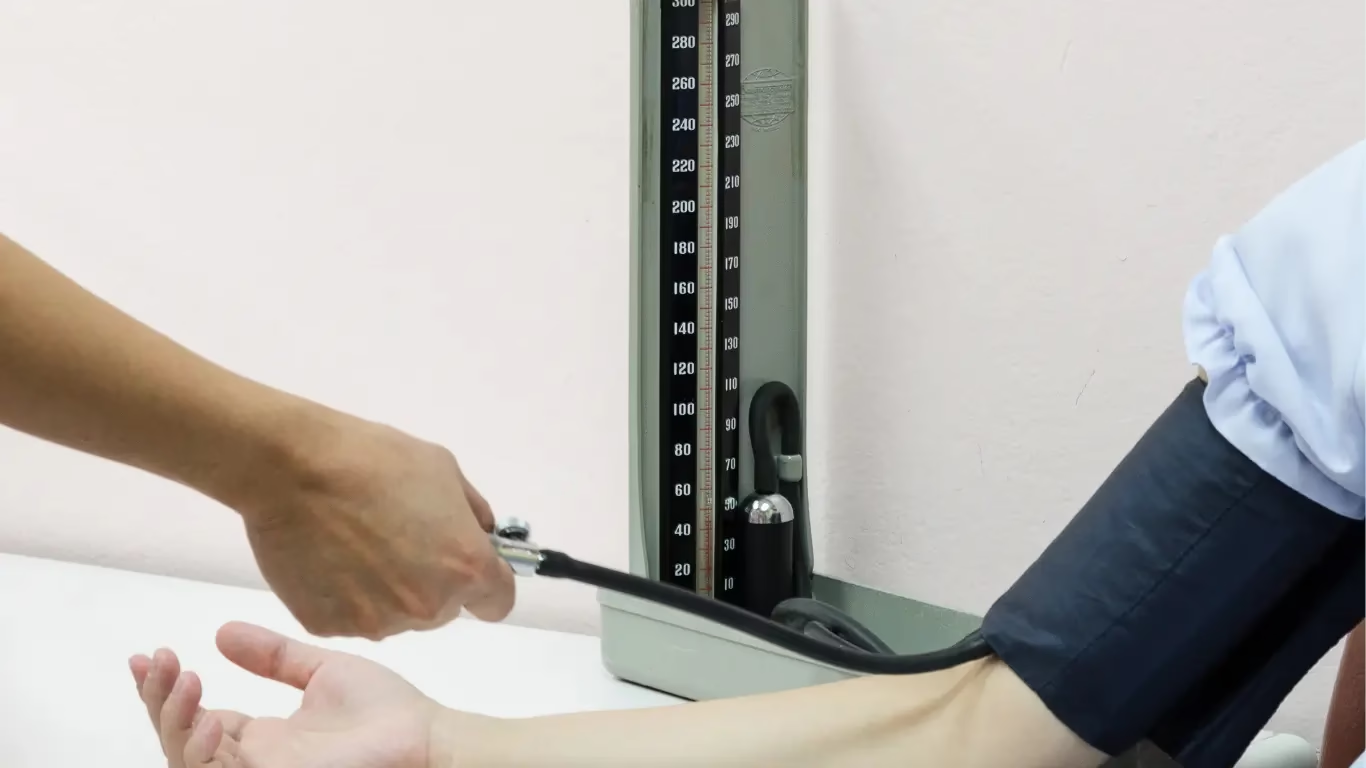
Dr. Mousumi Krishnatreya, head of Community Medicine at Nagaon Medical College, highlighted mercury’s toxicity and long-term dangers to both health and the environment. She pointed out that a 2011 study estimated annual mercury emissions of about eight tonnes in India from medical measuring instruments nearly 70% of it from improperly discarded sphygmomanometers, and the rest from broken thermometers.
Dr. Mrinal Haloi, Associate Professor of Forensic Medicine at Gauhati Medical College, stressed that mercury exposure in women of reproductive age could endanger the next generation. Switching to digital and aneroid devices is not just safer but life-saving while also protecting ecosystems, he said.
Ajoy Hazarika, lawyer and secretary of CLPFA, emphasized consumer education. Public awareness on safe handling and disposal of mercury products is essential not only to safeguard our families but also to reduce healthcare’s environmental footprint, she remarked.
Nilanjana Bose of Consumer Voice added that the medical sector has already begun moving away from mercury, with digital alternatives proving both accurate and affordable. Now, it’s time for ordinary citizens to embrace mercury-free devices too, she said.