
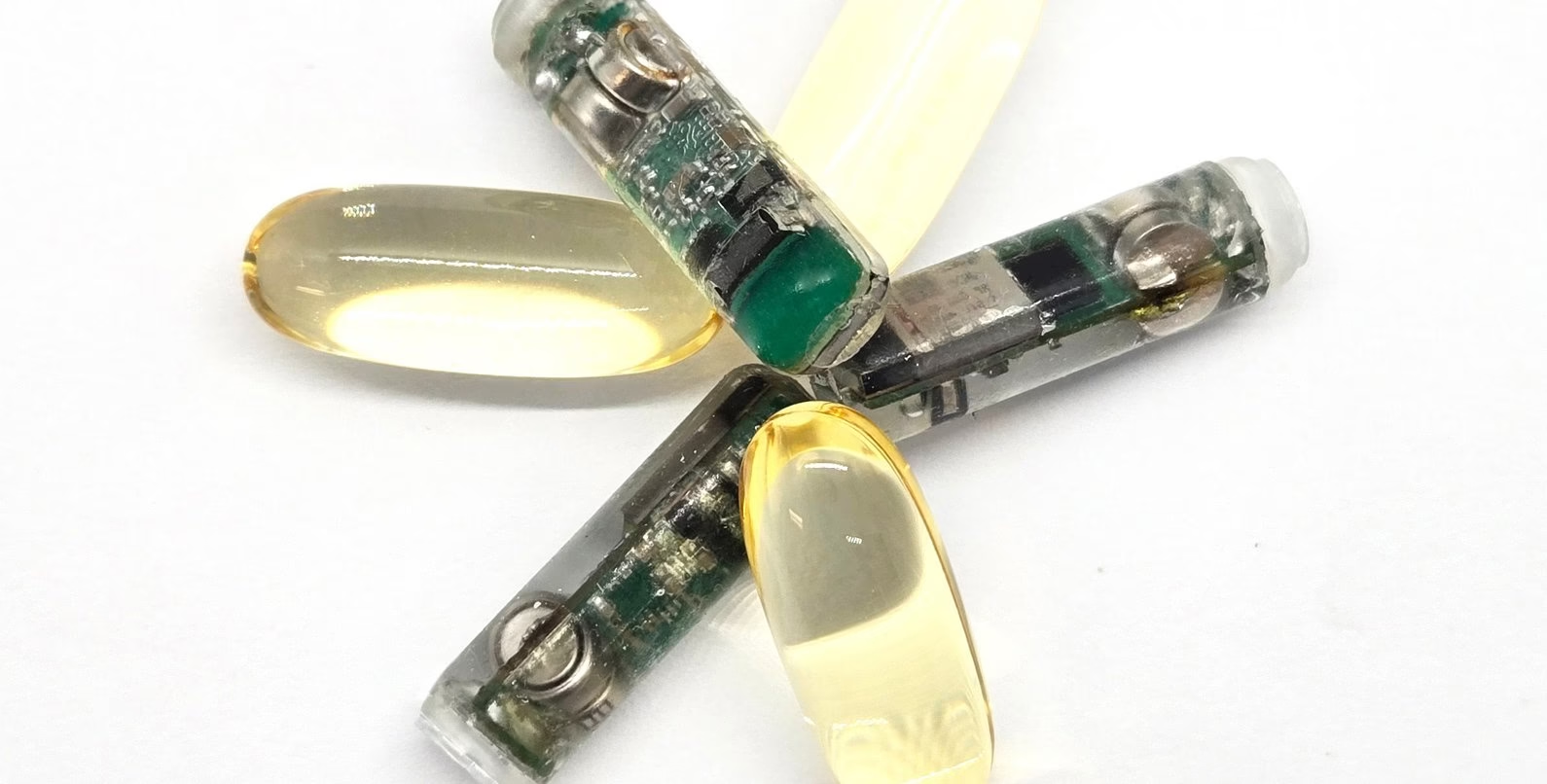
A team of scientists from Tianjin University and other Chinese research institutions has developed an innovative oral capsule that enables real-time communication and control of gut bacteria via a smartphone application. This groundbreaking technology could revolutionize digital health monitoring and targeted therapeutic interventions.
The research, published in Nature Microbiology, involved testing the capsule on pigs with induced colon inflammation (colitis). The scientists engineered a strain of Escherichia coli (E. coli) to respond to signs of gut inflammation by emitting light. Once inside the body, this modified bacterium detects nitrate a key biomarker for colitis and produces a bioluminescent signal.
To interact with the engineered bacteria, the team created a swallowable capsule embedded with a circuit board, LED lights and battery power. The capsule is capable of detecting the light emitted by the bacteria and transmitting that data to a connected smartphone via Bluetooth.
Remarkably, the system allows for two-way communication. Using the mobile app, researchers sent commands to the capsule to flash an internal LED. This light signal activated a light-sensitive genetic circuit in the E. coli, prompting the bacteria to produce anti-inflammatory antibodies that helped reduce the colitis symptoms in pigs.
This approach not only enables real-time diagnosis of gut conditions but also allows for precise, remotely controlled delivery of therapeutic agents inside the body. According to the researchers, further development and clinical testing may eventually lead to the use of such capsules in human medicine.
As a proof of concept, we modified E. coli Nissle 1917 to detect inflammation-linked nitric oxide and emit bioluminescence for diagnosing colitis in pigs, the study noted. “Our work demonstrates the potential of combining synthetic biology with optoelectronic devices for digital health solutions and controllable therapies.