
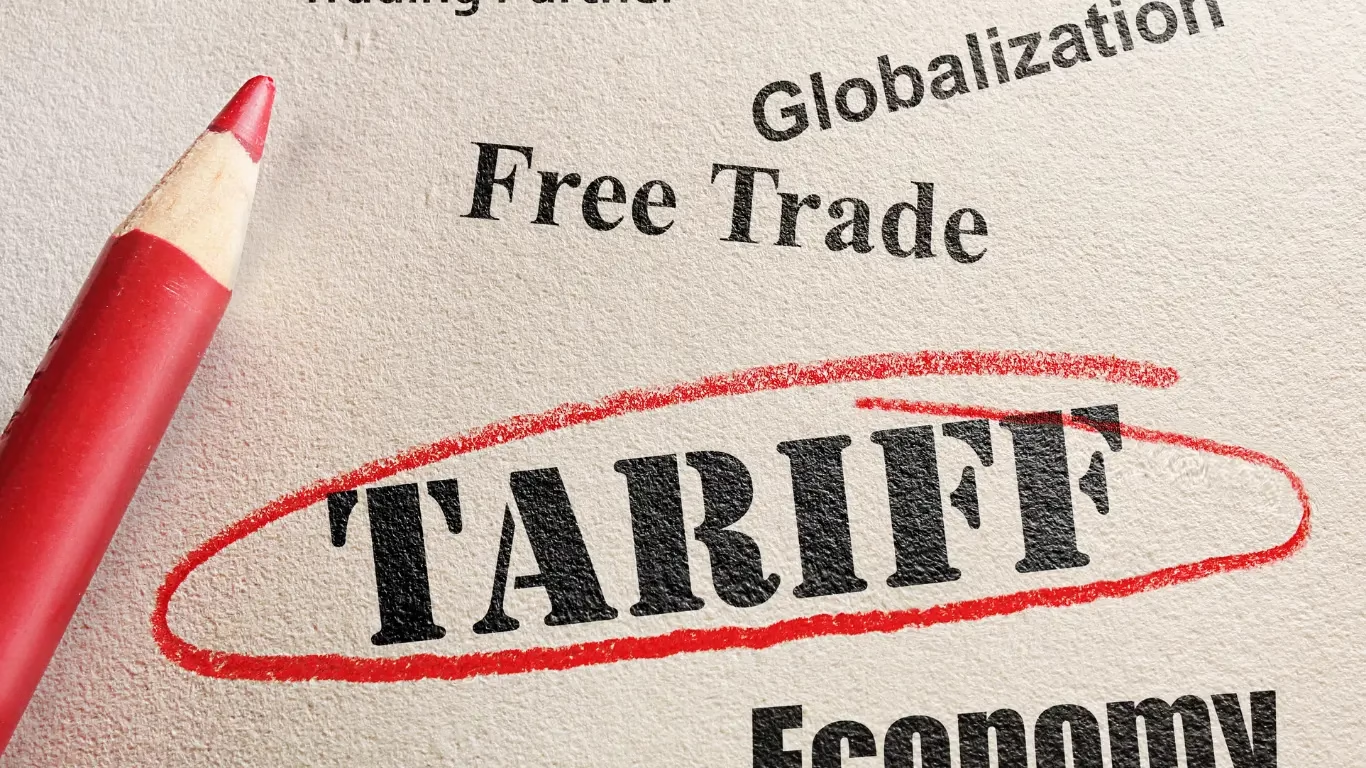
Trade negotiators from the US and India are holding intense, last-minute discussions to finalize a tariff-reduction agreement before the July 9 deadline set by President Trump. The talks aim to prevent the reimposition of a suspended 26% US tariff on Indian exports.
India is willing to cut tariffs on certain US goods, including medical devices, automobiles, energy products, and specific fruits. However, it is resisting US demands to open up its sensitive agriculture and dairy sectors, citing domestic concerns. These areas remain key sticking points in the negotiations, even as Washington pushes for wider market access.
For medical devices, the proposed 26% tariff by the US marks a significant jump from the earlier 0–6% range and exceeds India’s existing 0–7.5% tariff on similar American products. Indian exports of medical devices to the US are considerably smaller compared to its imports from the US, reflecting an existing trade imbalance. Industry experts note that Indian medical device exporters face more significant hurdles from non-tariff barriers, such as the costly and complex US FDA approval process ranging from $9,280 to over $540,000 whereas American companies encounter relatively fewer restrictions in India.
Despite unresolved issues, both sides remain cautiously optimistic. Negotiators have been tasked with preparing for a possible deal announcement. India is seeking greater access for its labor-intensive goods, while the US views the talks as crucial for both strategic and economic reasons. The ultimate goal for both nations is to expand bilateral trade, with an ambition to double it to $500 billion by 2030.