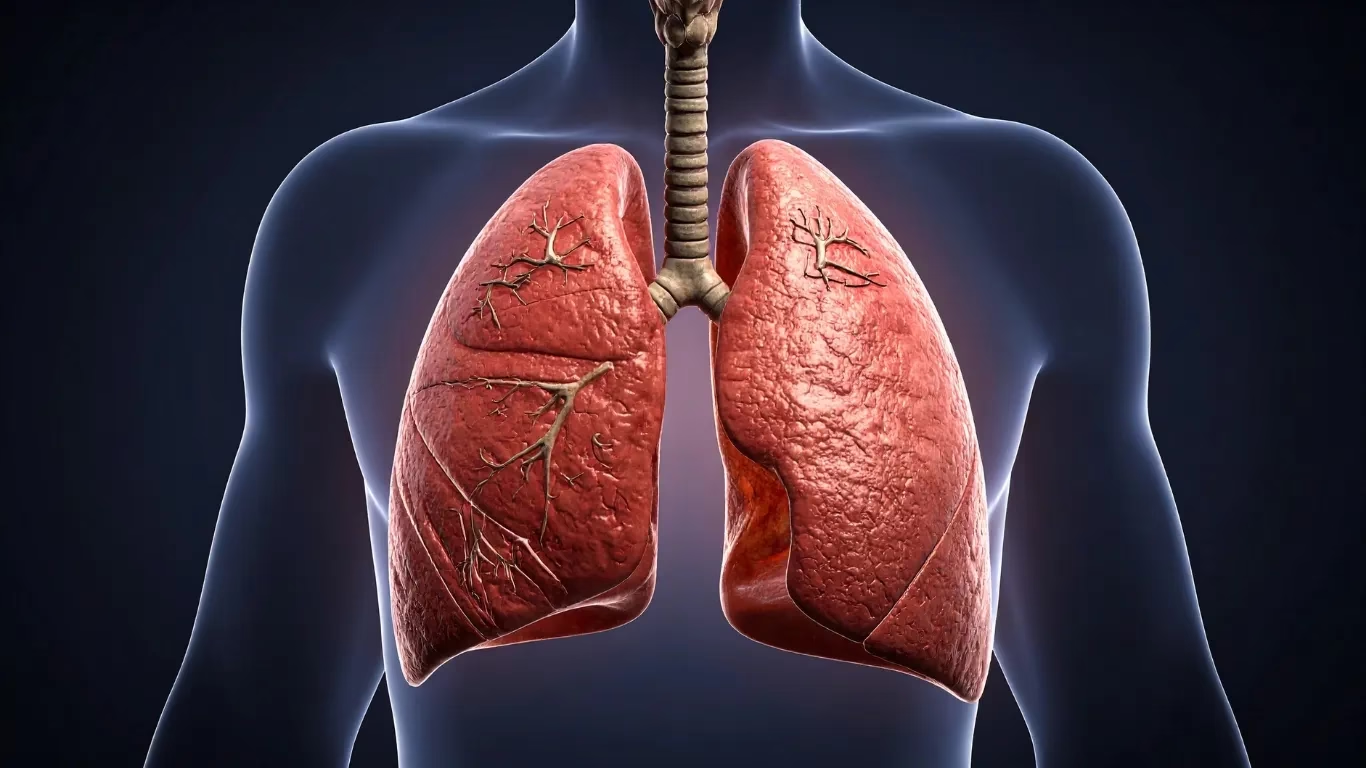
A new under-the-skin immunotherapy treatment for lung cancer, Tecentriq (atezolizumab), has been launched in India, offering a much faster alternative to traditional intravenous (IV) infusions. The therapy can now be administered in nearly seven minutes, whereas standard IV treatment often takes several hours.
Doctors believe the shorter treatment duration could greatly benefit both patients and hospitals by reducing long waiting hours and improving efficiency in oncology units. Since IV infusions occupy hospital chairs for extended periods, the new subcutaneous method may allow doctors to treat up to five patients in the time earlier needed for a single infusion.
The treatment has been introduced by Roche Pharma India, which said the quicker administration process is expected to enhance patient comfort and help hospitals manage oncology resources more effectively. The price of the therapy has been fixed at around Rs 3.7 lakh per vial.
In India, the therapy has received approval from the Central Drugs Standard Control Organisation for eligible adult patients with adjuvant and metastatic non-small cell lung cancer (NSCLC), including certain chemotherapy-free treatment settings.
Internationally, the treatment has already secured approval in over 85 countries, with more than 10,000 patients having received the therapy. Clinical studies have shown that the subcutaneous version delivers similar effectiveness and safety as the IV formulation while significantly reducing administration time.
Findings from the IMscin002 study, presented at the European Lung Cancer Congress 2024, revealed that nearly 80 per cent of patients preferred the subcutaneous therapy due to shorter hospital visits, improved comfort, and lower emotional stress.
Another study, IMscin001, presented at the ESMO Congress 2023, found that 90 per cent of healthcare professionals considered the therapy easy to administer, while 75 per cent believed it could save valuable time for medical staff.
Sajjan Rajpurohit said the innovation could help reduce logistical challenges faced by cancer patients who often spend long hours at hospitals for treatment.
He noted that traditional IV administration is not only time-consuming for patients but also increases pressure on tertiary healthcare facilities. According to him, faster subcutaneous delivery may significantly improve the treatment experience.
Experts also believe such rapid treatment formats could encourage more decentralised cancer care across India. With reduced infusion time and lower dependence on hospital infrastructure, cancer treatment may increasingly shift towards daycare oncology centres instead of being limited to large tertiary hospitals.
Amit Rauthan said simplified treatment methods could improve accessibility as the country continues to witness a growing cancer burden.
He added that shorter treatment formats may help reduce strain on healthcare infrastructure while making cancer care more convenient for both patients and medical institutions.