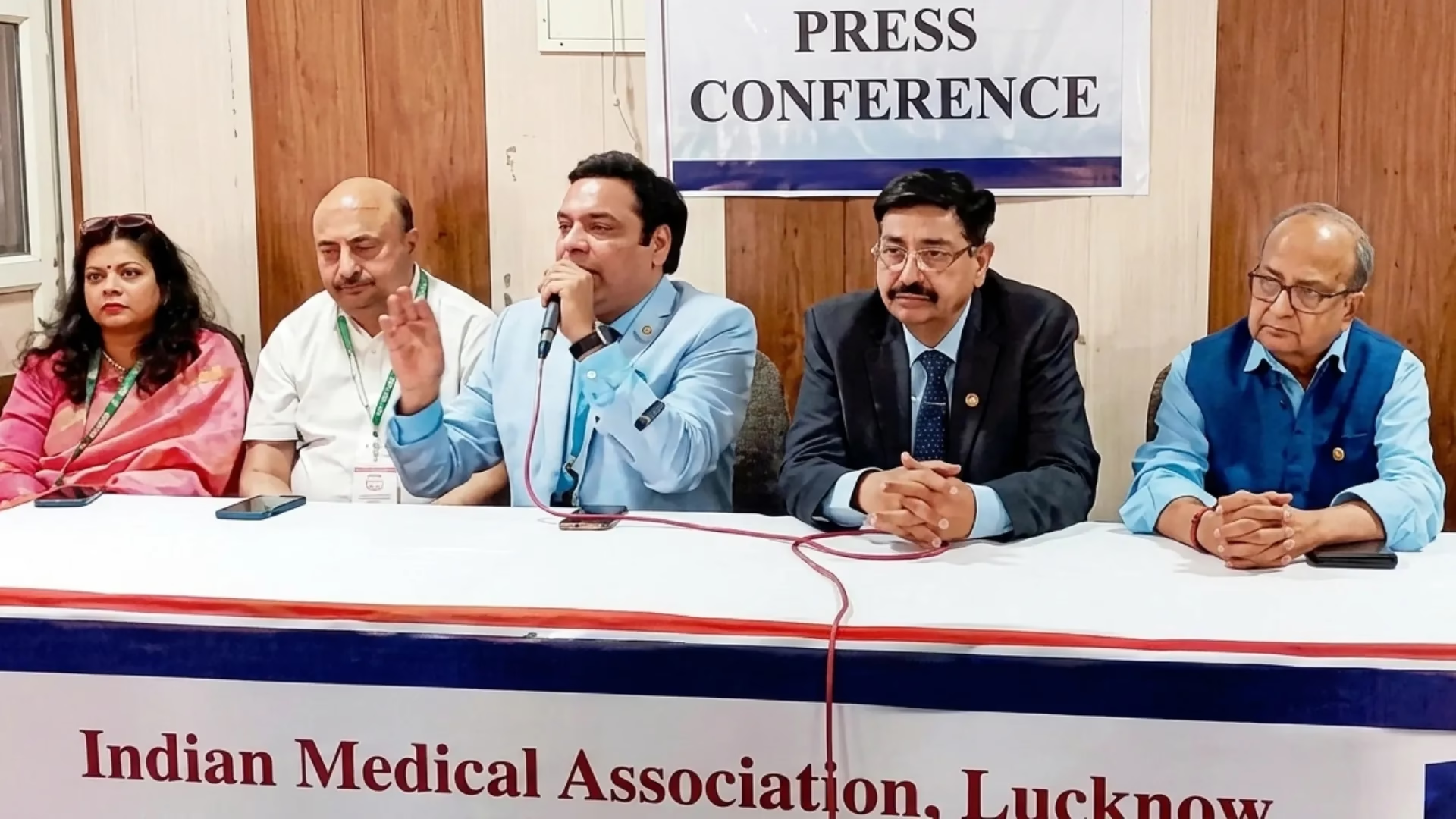

Around one in four patients in Uttar Pradesh initially seeks treatment from unqualified practitioners before consulting a registered medical professional, according to the Indian Medical Association. The estimate based on doctors’ clinical observations covers both OPD and emergency cases.
“Even today, nearly 25% of patients first approach quacks before reaching a qualified doctor. In rural and semi-rural regions, particularly on the outskirts of cities like Lucknow, this proportion can be even higher,” said Dr Rajeev Goel, president of IMA UP. He noted that patients often report to hospitals only after their condition has worsened.
Highlighting the consequences, Dr Shweta Srivastava, secretary of the IMA Lucknow branch, said many patients arrive with aggravated illnesses. “For example, typhoid cases often receive incomplete or incorrect early treatment, making the infection more severe by the time they reach a proper facility,” she said.
The association pointed out that while laws exist to curb illegal medical practice, enforcement remains weak. Dr Ravish Agarwal, president-elect of IMA UP, said that patients from rural and economically weaker backgrounds are particularly vulnerable.
Doctors attribute the reliance on quacks largely to accessibility and affordability issues. “In many areas, qualified doctors or government facilities are either too far or overcrowded. Quacks are easily available, charge less initially, and gradually earn people’s trust,” said Dr Manoj K Asthana, president of the IMA Lucknow branch. “People try to save time and money, but it often results in complications later.”
IMA also observed that government crackdowns on illegal clinics and diagnostic centres have not kept pace with their rapid spread. While regulatory mechanisms have evolved over time with the National Medical Commission introducing structured registration processes following directions from the Supreme Court of India doctors say compliance has become cumbersome due to extensive documentation and inspections. The state government has since extended registration validity to five years to ease the administrative burden.
Meanwhile, health authorities maintain that action against quackery is ongoing. Dr AP Singh, additional chief medical officer, said regular enforcement drives are being conducted and encouraged citizens to report illegal practices, assuring confidentiality.
Doctors emphasised that improving access to affordable and timely healthcare especially in rural areas is crucial to reducing dependence on unqualified practitioners.